







What's Happening?
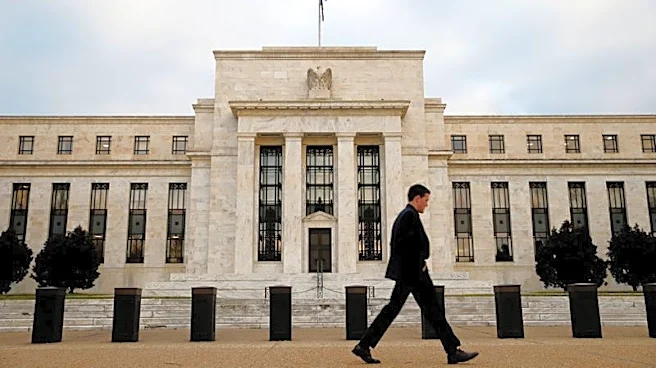
The Federal Reserve is closely monitoring upcoming economic data, including the Consumer Price Index (CPI) and Producer Price Index (PPI), to determine future interest rate decisions. The CPI, which measures changes in prices for consumer goods and services,
is set to be released on June 10, 2026, while the PPI, which tracks changes in prices from the perspective of producers, will be released on June 11, 2026. These reports are crucial as they influence the Federal Reserve's decisions on interest rates, which directly affect credit-card rates, car and personal loans, mortgage rates, and savings interest. The Federal Reserve's goal is to manage inflation and ensure economic stability, and these reports will provide insights into whether prices are stabilizing or continuing to rise.
Why It's Important?
The significance of these economic indicators lies in their impact on everyday financial decisions for consumers and businesses. If the CPI and PPI indicate rising prices, it suggests that inflation remains a concern, potentially leading the Federal Reserve to maintain higher interest rates for a longer period. This would mean continued high borrowing costs for consumers, affecting their ability to finance homes, cars, and other major purchases. Conversely, if the data shows price stabilization, it could prompt the Federal Reserve to consider lowering interest rates, providing relief to borrowers and potentially stimulating economic activity. The outcomes of these reports are critical for financial planning and budgeting for both individuals and businesses.
What's Next?
Following the release of the CPI and PPI, the Federal Reserve will analyze the data to decide on future interest rate adjustments. If inflation appears to be under control, there may be discussions about reducing interest rates later in the year, which could lower borrowing costs and encourage spending. However, if inflation remains high, the Federal Reserve might continue its current policy of maintaining higher rates to curb inflation. Stakeholders, including financial institutions, businesses, and consumers, will be closely watching these developments to adjust their strategies accordingly.