





What's Happening?
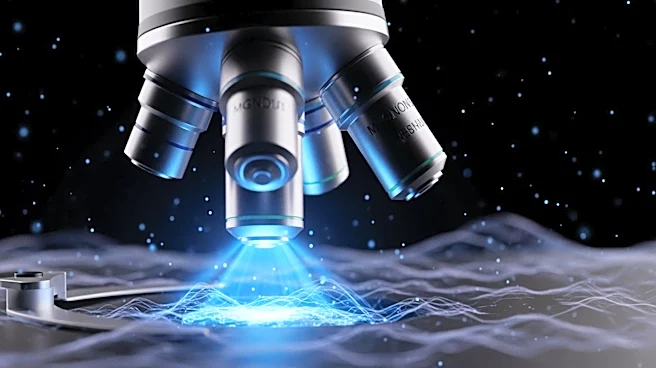
Researchers from the University of British Columbia, Argonne National Laboratory, and the Canadian Light Source have discovered a common electronic 'fingerprint' in multilayer nickelate superconductors. Using angle-resolved photoemission spectroscopy
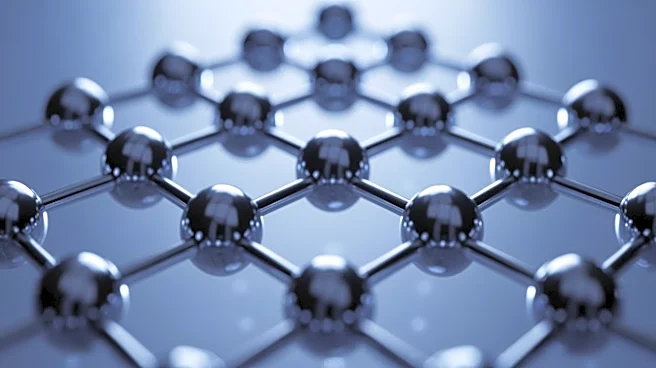
(ARPES), they mapped the electronic states of these materials, revealing similarities with cuprates, another type of high-temperature superconductor. The study, published in Nature Physics, highlights the potential of nickelates in quantum computing and other advanced technologies. The research focused on the electronic structure of nickelates, which are composed of two-dimensional NiO2 layers. The findings suggest that the electronic and magnetic properties of nickelates closely mirror those of cuprates, offering insights into the mechanisms of superconductivity.
Why It's Important?
The discovery of a common electronic fingerprint in nickelate superconductors is significant for the development of quantum technologies. Superconductors are crucial for creating more efficient energy systems, advanced computing, and medical imaging devices. Understanding the electronic structure of nickelates could lead to the development of new high-temperature superconductors with improved properties. This research bridges the gap between different experimental techniques, providing a comprehensive view of the magnetic and electronic properties of these materials. The findings could guide future efforts to design new superconducting materials, potentially revolutionizing industries reliant on quantum technology.
What's Next?
The research team plans to further explore the electronic properties of layered nickelates using time-resolved ARPES, a technique that captures electron responses to light on short timescales. This approach could reveal interactions crucial for superconductivity, offering deeper insights into how superconductivity emerges and coexists with magnetic order. The team aims to compare nickelates with cuprates and other unconventional superconductors, potentially guiding the design of new materials with enhanced superconducting properties. These efforts could significantly impact the development of quantum technologies and other advanced systems.