







What's Happening?
Enverus Intelligence Research (EIR) has released a report indicating that the global oil market is likely to experience a prolonged inventory deficit and sustained high prices, even as flows through the Strait of Hormuz begin to recover. The report highlights
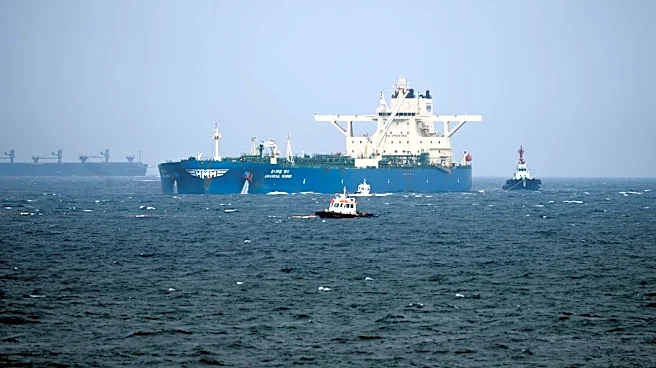
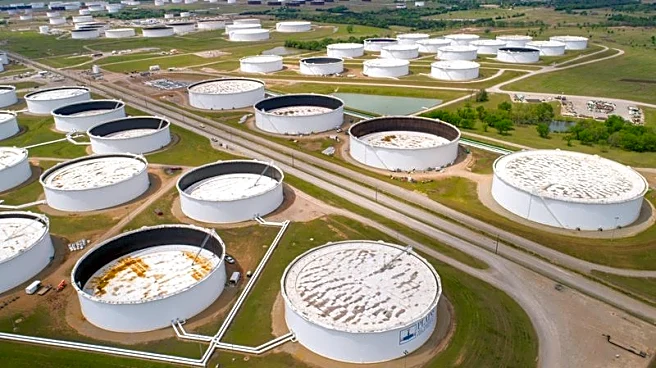
that the supply losses already incurred will continue to affect oil prices beyond the immediate crisis. EIR's analysis suggests that OECD crude and product inventories are projected to fall to a 20-year low by the fourth quarter of 2026. The report forecasts that Brent crude will average around $110 per barrel in the second half of 2026, peaking near $117 per barrel in the fourth quarter, and remaining above $100 per barrel until the third quarter of 2027. The disruption in the Strait of Hormuz, a critical chokepoint for crude oil exports, has intensified concerns over inventory levels and supply security.
Why It's Important?
The prolonged high oil prices have significant implications for global markets, particularly for countries heavily reliant on oil imports. The sustained price increase could lead to higher costs for consumers and businesses, potentially slowing economic growth. The geopolitical risk premium embedded in oil prices reflects heightened concerns about future supply security, which could lead to increased volatility in the oil market. This situation may also impact energy policies and strategies, as countries seek to diversify their energy sources and reduce dependency on oil imports. The ongoing supply disruptions and inventory deficits could strain international relations and trade, as countries navigate the challenges of securing stable energy supplies.
What's Next?
As diplomatic efforts continue to restore normal shipping patterns through the Strait of Hormuz, the focus will be on rebuilding inventories to stabilize the market. However, EIR suggests that rebuilding inventories may take longer than restoring physical flows, leaving markets vulnerable to higher prices well into 2027. Stakeholders, including governments and energy companies, may need to explore alternative energy sources and invest in infrastructure to mitigate the impact of future disruptions. The situation could also prompt discussions on energy security and the need for international cooperation to ensure stable and secure energy supplies.