

What's Happening?
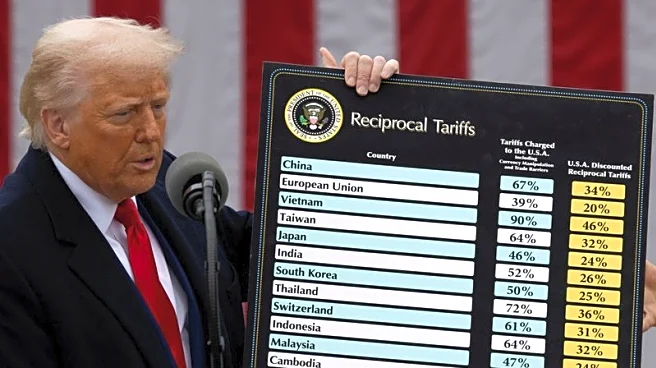
Federal judge Richard Eaton of the U.S. Court of International Trade has ruled that importers are entitled to refunds following the Supreme Court's invalidation of tariffs imposed under the International Emergency Economic Powers Act (IEEEPA). The ruling
comes after more than $130 billion was collected through these tariffs by mid-December 2025. The decision provides clarity on the refund process, which the Supreme Court did not address. This ruling follows the U.S. Court of Appeals for the Federal Circuit's refusal to delay the refund process, despite the Trump Administration's Justice Department's efforts to do so.
Why It's Important?
The court's decision to order tariff refunds is a significant development for U.S. importers, particularly small businesses that have been financially burdened by these tariffs. The ruling is seen as a victory for these businesses, as it promises the return of billions of dollars paid in tariffs deemed unlawful. This decision could have a substantial impact on the U.S. economy by alleviating financial pressure on small businesses, potentially leading to increased investment and growth. It also highlights the ongoing legal and political challenges surrounding tariff policies and their implementation.
What's Next?
The next steps involve the government establishing a clear and efficient process for issuing refunds to affected importers. There is concern among small businesses that the government may delay the refund process, which could prolong financial strain. Stakeholders, including business coalitions like We Pay the Tariffs, are advocating for a swift and automatic refund process. The outcome of this process will be closely watched by businesses and policymakers, as it could influence future tariff policies and trade relations.