







What's Happening?
Sullivan & Cromwell, a prominent Wall Street law firm, has issued an apology to a federal bankruptcy judge due to errors in a court filing that were attributed to AI hallucinations. The firm's partner, Andrew Dietderich, acknowledged that the filing contained
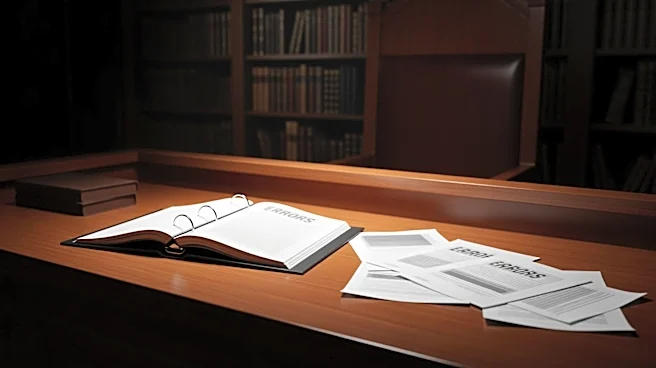
inaccurate citations and fabricated legal sources. These errors were identified by Boies Schiller Flexner, the law firm representing creditors in the case involving the bankrupt firm Prince Global Holdings. Despite having policies and review processes in place to prevent such issues, the errors were not caught before submission. Dietderich expressed regret and took responsibility for the oversight, promising to submit a corrected version of the filing.
Why It's Important?
The incident highlights the growing concern over the use of AI in legal work, particularly the phenomenon known as AI hallucinations, where AI tools generate false information. This poses significant risks in legal proceedings, where accuracy is paramount. The rise of fake legal citations since 2023 underscores the need for stringent oversight and verification processes when integrating AI into legal practices. The situation at Sullivan & Cromwell serves as a cautionary tale for other law firms and industries relying on AI, emphasizing the importance of human oversight and the potential consequences of technological errors in high-stakes environments.
What's Next?
Sullivan & Cromwell plans to submit a corrected version of the court filing, addressing the inaccuracies caused by AI hallucinations. The firm is likely to review and possibly strengthen its policies and procedures regarding AI use to prevent future occurrences. This incident may prompt other law firms to reassess their reliance on AI and implement more robust checks to ensure the integrity of legal documents. Additionally, the legal industry might see increased discussions and developments around the ethical and practical implications of AI in legal work.