






What's Happening?
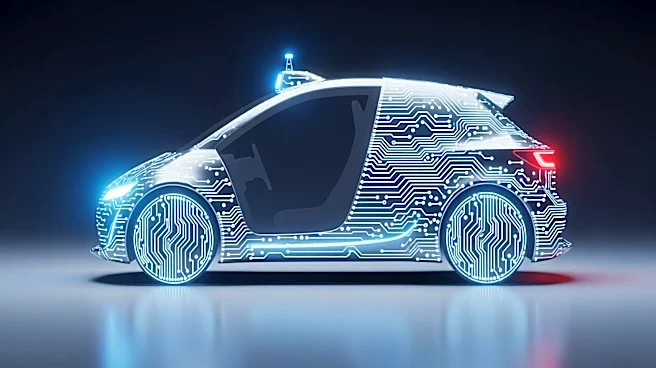
QCraft, a prominent autonomous driving technology provider, has announced its expansion into the broader realm of Physical AI. This development was unveiled at the Beijing Auto Show, where the company introduced the QCraft Physical AI Model. The initiative
marks a strategic shift from focusing solely on autonomous vehicles to embracing AI systems that interact with the physical world. CEO Dr. James Yu emphasized that the industry is transitioning into a new phase where AI systems are expected to perceive, reason, and act in real-world environments. The company's approach integrates World Models with Reinforcement Learning, allowing for advanced simulation and real-world application. QCraft also introduced QPilot MAX, a city-level Navigate on Autopilot solution, which is already deployed across numerous production models in China. The company is also advancing its L4 programs, including Robotaxi solutions and logistics robots, underscoring its commitment to enhancing AI capabilities over hardware reliance.
Why It's Important?
QCraft's expansion into Physical AI signifies a pivotal shift in the autonomous driving and AI industries. By broadening its focus, QCraft is positioning itself at the forefront of a new era where AI systems are not limited to driving but are integrated into various real-world applications. This move could potentially revolutionize sectors such as logistics, urban planning, and public safety by providing more efficient and safer AI-driven solutions. The deployment of QPilot MAX across multiple vehicle models highlights the scalability and practical application of QCraft's technology, which could lead to significant advancements in autonomous vehicle safety and efficiency. The company's emphasis on reducing false activation rates and potential accident avoidance could also influence insurance premiums, offering economic benefits to consumers.
What's Next?
QCraft's future plans include expanding the deployment of its QPilot MAX system to additional vehicle models, with expectations to cover 50 more models this year. The company is also conducting road tests in international locations such as Munich and Paris, indicating a potential global expansion. As QCraft continues to develop its Physical AI capabilities, it may face competition from other companies in the robotics and AI sectors. Stakeholders, including automotive manufacturers and urban planners, will likely monitor QCraft's progress closely, as its technology could impact various industries. The company's focus on safety metrics and insurance implications may also prompt discussions among policymakers and insurance providers regarding the integration of AI technologies in public and private sectors.
Beyond the Headlines
The shift towards Physical AI raises important ethical and regulatory considerations. As AI systems become more integrated into daily life, questions about data privacy, security, and the ethical use of AI will become increasingly pertinent. QCraft's approach, which prioritizes AI capability over hardware, may set a precedent for other companies, potentially leading to a reevaluation of current industry standards. Additionally, the company's focus on safety and accident prevention could influence public perception of autonomous technologies, potentially increasing consumer trust and adoption. As AI continues to evolve, stakeholders will need to address these broader implications to ensure that advancements are both beneficial and responsible.