

What's Happening?
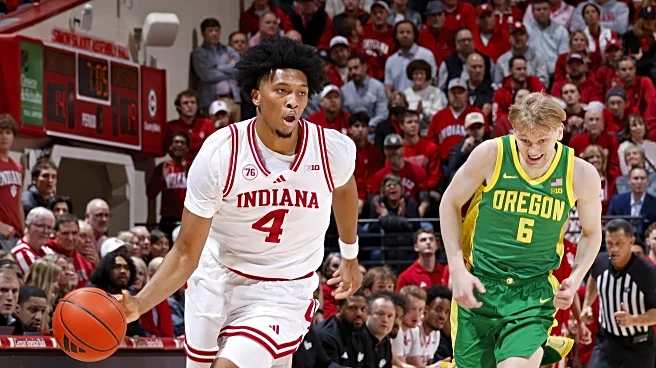
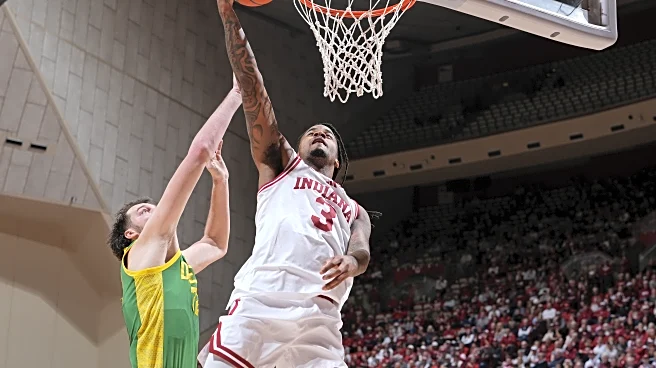
The Oregon Ducks' recent College Football Playoff appearance against the Indiana Hoosiers drew significant television viewership, highlighting the team's strong national brand. Despite a 56-22 loss in the Peach Bowl, the game attracted 18 million viewers, peaking at 21.4 million, making it the third highest viewed Peach Bowl in history. This viewership surpassed that of the Fiesta Bowl, which featured Ole Miss and Miami. The Ducks' previous games, including their Orange Bowl win against Texas Tech, also garnered high viewership, underscoring Oregon's appeal to a national audience. The team's ability to attract viewers is a testament to their brand strength and the growing interest in diverse playoff matchups.
Why It's Important?
The high viewership for Oregon's
playoff games reflects the team's strong national brand and the increasing popularity of college football. This visibility is crucial for the Ducks as it enhances their appeal to recruits, sponsors, and fans. The significant audience numbers also indicate a growing interest in varied playoff matchups, suggesting a shift in viewer preferences towards more diverse teams in the postseason. For Oregon, maintaining a strong brand presence is essential for attracting top talent and securing financial support. The team's ability to draw large audiences can also influence future scheduling and broadcasting decisions, impacting the broader landscape of college football.
Beyond the Headlines
Oregon's strong viewership numbers highlight the potential for college football to expand its audience by featuring a wider range of teams in high-stakes games. This trend could encourage the NCAA to consider more inclusive playoff formats, providing opportunities for less traditional powerhouses to compete on a national stage. Additionally, the Ducks' brand strength may inspire other programs to invest in marketing and branding efforts to enhance their visibility and attract top recruits. As college football continues to evolve, the role of media and broadcasting in shaping the sport's future will be increasingly significant.