





What's Happening?
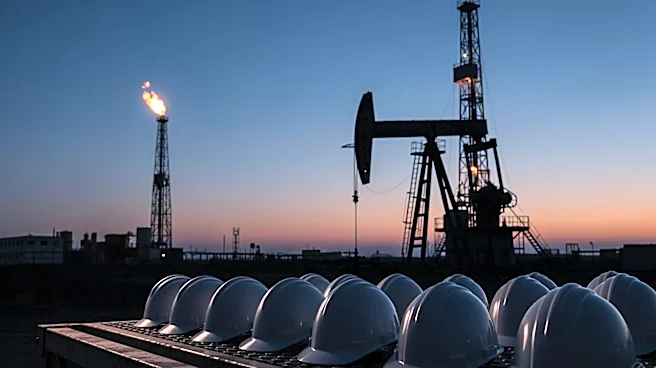
The U.S. oil and gas extraction industry has seen a significant decline in its workforce, reaching its lowest level since 2022. According to data from the U.S. Bureau of Labor Statistics, the number of employees in this sector stood at 115,200 in April
2026. This marks a continued downward trend from previous years, with employment figures dropping from 118,700 in April 2025 and 121,200 in April 2024. The highest recorded employment in recent years was in April 2016, with 178,500 workers. The decline in workforce numbers is part of a broader trend affecting the energy sector, which employed 8.5 million workers in 2024, accounting for 5.4% of all U.S. jobs.
Why It's Important?
The reduction in the oil and gas workforce highlights ongoing challenges within the energy sector, including market volatility and shifts towards renewable energy sources. This decline could have significant implications for states heavily reliant on energy jobs, such as Texas, California, and Michigan. The decrease in employment may also impact local economies and the broader U.S. energy market, potentially leading to increased energy prices and affecting energy security. The trend underscores the need for strategic planning and investment in workforce development to adapt to changing energy demands.
What's Next?
As the energy sector continues to evolve, there may be increased focus on transitioning workers to roles in renewable energy and other emerging industries. Policymakers and industry leaders might prioritize initiatives to support workforce retraining and development. Additionally, the industry could see further consolidation and technological advancements aimed at improving efficiency and sustainability. Monitoring employment trends and adapting to market changes will be crucial for maintaining economic stability and energy independence.