


What's Happening?
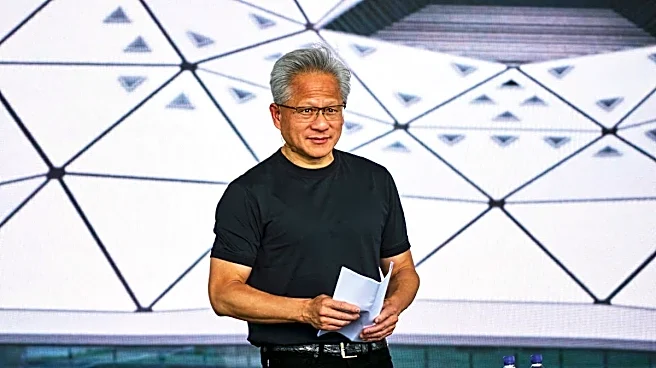
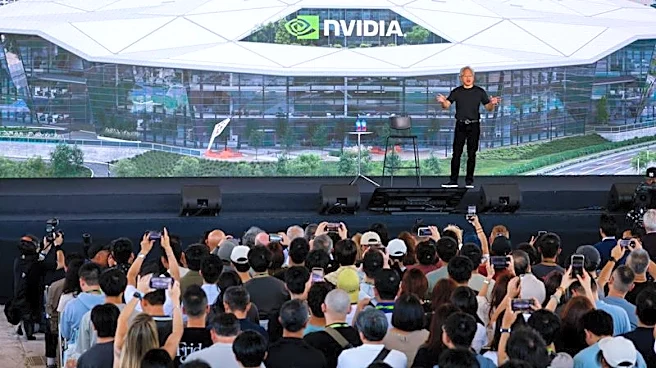
NVIDIA is set to host its annual GTC Taipei event, where CEO Jensen Huang will present the latest advancements in AI computing. The event is expected to showcase a new platform for PCs, marking a significant development in consumer hardware. NVIDIA, along
with partners Arm and Microsoft, has been teasing a new 'AI PC' chip, which is anticipated to be a highlight of the event. This chip is based on the GB10 chip used in the DGX Spark, and it represents a major step forward in integrating AI capabilities into personal computing. Additionally, NVIDIA's 'Vera Rubin' platform for datacenters and AI, which includes a comprehensive suite of GPUs and CPUs, will be discussed, although no new hardware launches for AI datacenters are expected at this time.
Why It's Important?
The unveiling of NVIDIA's new AI PC platform could significantly impact the computing industry by integrating advanced AI capabilities into personal computers. This development may lead to enhanced performance and new functionalities in consumer PCs, potentially transforming how users interact with technology. The collaboration with Arm and Microsoft suggests a strategic alignment that could influence future industry standards and drive innovation. For businesses and consumers, this could mean more powerful computing solutions and a shift towards AI-driven applications, affecting sectors ranging from gaming to professional computing.
What's Next?
As NVIDIA rolls out its new AI PC platform, the industry will likely see a wave of new products and applications leveraging these advancements. Key stakeholders, including PC manufacturers and software developers, may begin integrating these technologies into their offerings, potentially leading to a new era of AI-enhanced computing. The response from competitors and the broader tech community will be crucial in determining the platform's success and its adoption rate. Additionally, NVIDIA's continued focus on Physical and Agentic AI suggests further developments in robotics and autonomous systems, which could open new markets and applications.