



What's Happening?
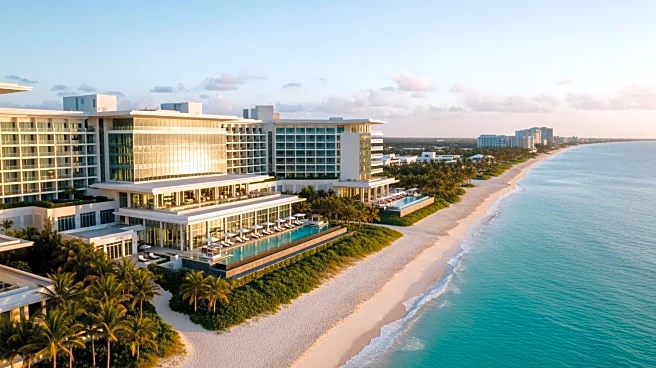
The Ritz Carlton Key Biscayne in Miami has reopened following a $100 million renovation, marking its first comprehensive renewal in nearly 25 years. The transformation was led by owner and developer Gencom, in collaboration with design studios Hart Howerton, DesignAgency, and Chapi Chapo Design. The resort, set on 17 acres of beachfront, has been reimagined with open-air architecture and contemporary island aesthetics. All guest rooms and suites have been redesigned, and the property now features six new dining concepts, including Mediterranean and Aegean-inspired cuisine. The wellness offerings have been significantly upgraded with a new 30,000 square foot spa, featuring 16 treatment rooms and a full-service salon. The resort aims to cater
to high-end leisure and wellness demand, offering expanded amenities for families and long-stay guests.
Why It's Important?
The reopening of The Ritz Carlton Key Biscayne is significant for the Miami luxury market, as it enhances the city's appeal as a destination for high-end travelers. The extensive renovation aligns with the growing demand for experience-driven luxury and health-focused travel. By upgrading its facilities and services, the resort is poised to attract a diverse clientele, including leisure, family, and group travelers. This development is likely to boost the local economy by increasing tourism and creating job opportunities in the hospitality sector. Additionally, the resort's focus on wellness and lifestyle amenities reflects broader trends in the luxury travel industry, where personalized and holistic experiences are increasingly valued.
What's Next?
With its reopening, The Ritz Carlton Key Biscayne aims to reinforce its position as a premier destination resort in the Miami area. The resort's enhanced offerings are expected to attract both domestic and international travelers seeking luxury and wellness experiences. The property will likely continue to innovate its services to meet evolving consumer preferences, potentially influencing other luxury hotels in the region to upgrade their facilities. The success of this transformation could lead to further investments in Miami's hospitality sector, as the city continues to compete with other global luxury destinations.