
What's Happening?
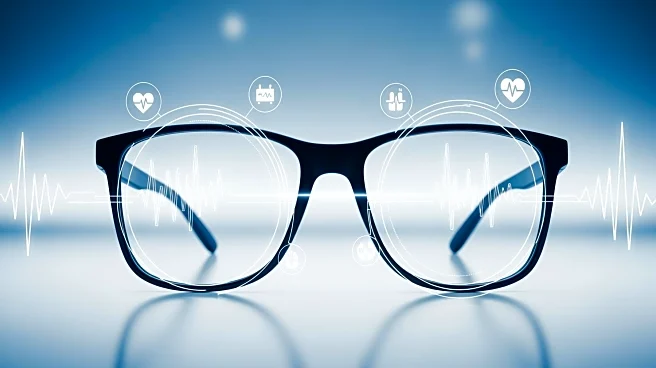
EyeJets, an Israeli company, is pioneering a new technology in the smart eyeglasses market that could revolutionize health monitoring. Unlike traditional smart glasses that project images onto lenses,
EyeJets' technology projects visual information directly onto the retina. This innovation allows for continuous monitoring of blood vessels, enabling early detection and tracking of diseases such as diabetes, hypertension, and glaucoma. The technology is already approved in Israel and the U.S., with further approvals pending. EyeJets is collaborating with U.S. medical centers to develop glasses specifically for diagnosing and monitoring diabetes. The company aims to integrate its technology into products from major global brands by 2027.
Why It's Important?
The development of EyeJets' smart eyeglasses represents a significant advancement in medical technology, offering a non-invasive method for continuous health monitoring. This could lead to earlier diagnosis and more personalized treatment plans, potentially reducing healthcare costs and improving patient outcomes. The technology's ability to provide real-time alerts for conditions like rising glucose levels is particularly beneficial for diabetic patients. Additionally, the integration of this technology into consumer products could make advanced health monitoring more accessible to the general public, transforming how individuals manage their health.
What's Next?
EyeJets plans to complete the development of its technology by the end of 2026, with the goal of embedding it into products from major brands by 2027. The company is in advanced discussions with several U.S. medical centers and aims to partner with leading smart-eyeglasses manufacturers. This could lead to widespread adoption of the technology, not only in healthcare but also in other sectors such as security and driver monitoring. The success of these partnerships will be crucial in determining the technology's impact on the market.
Beyond the Headlines
The implications of EyeJets' technology extend beyond healthcare. By eliminating the need for a physical display, the technology reduces power consumption and weight, making the glasses more comfortable for extended use. This could address some of the limitations of current smart glasses, potentially leading to broader applications in various industries. The technology also opens up possibilities for retina-based security identification, given the uniqueness of each retina, which could enhance security measures in various fields.