

What's Happening?
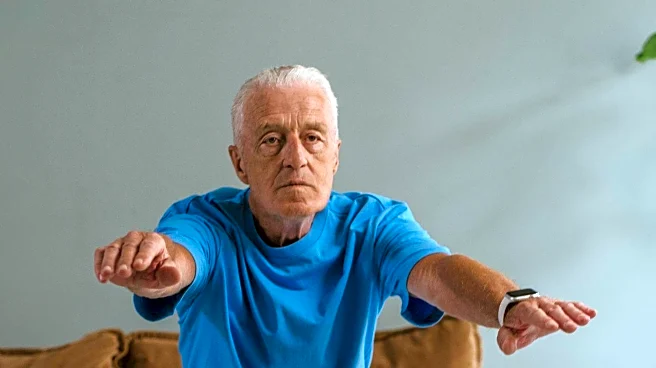
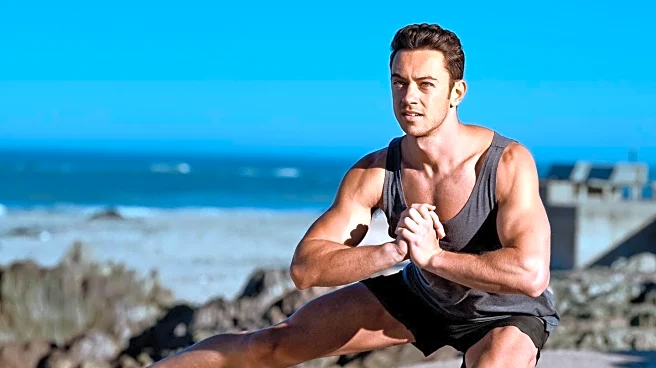
A new fitness routine designed by personal trainer Matt Bandelier aims to restore thigh strength in adults over 55. The routine, which takes only eight minutes, focuses on multi-directional and weight-bearing movements that are scalable and stability-driven. Bandelier emphasizes that traditional gym equipment like the leg press machine often isolates effort and fails to challenge balance or activate stabilizers around the knees and hips. The routine includes exercises such as box squats, bodyweight hip hinges, reverse lunges to knee drives, and split squat isometric holds. Each exercise is performed for one minute or 10 to 15 repetitions per side, and the sequence is repeated for a full eight-minute circuit. This approach is intended to mimic
real-life movements, enhancing functional strength and balance.
Why It's Important?
As people age, maintaining muscle strength and balance becomes crucial for preventing falls and ensuring mobility. This routine addresses the need for exercises that not only build muscle but also improve balance and coordination, which are often neglected in traditional gym workouts. By focusing on bodyweight exercises that engage multiple muscle groups, the routine offers a practical solution for older adults who may not have access to gym equipment or prefer to exercise at home. The emphasis on functional movements can help older adults perform daily activities more easily and reduce the risk of injury.
What's Next?
The introduction of this routine could lead to increased interest in home-based fitness programs tailored for older adults. Fitness trainers and health clubs might consider incorporating similar routines into their offerings to cater to the aging population. Additionally, there may be further research into the benefits of functional exercises for older adults, potentially influencing public health recommendations and fitness guidelines.
Beyond the Headlines
This development highlights a broader trend towards personalized and functional fitness solutions that cater to specific age groups and health needs. As the population ages, there is a growing demand for fitness programs that are not only effective but also accessible and safe for older adults. This shift could lead to a reevaluation of traditional fitness paradigms and encourage innovation in exercise science and program design.