





What's Happening?
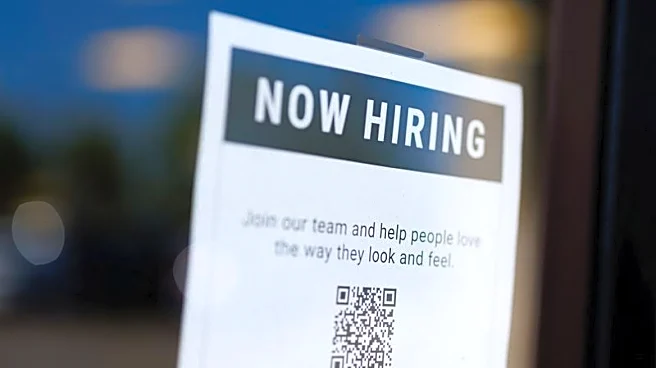
The U.S. Labor Department announced that the country added 115,000 jobs in April, surpassing expectations and maintaining the unemployment rate at 4.3%. This development comes despite ongoing economic challenges such as high energy prices and geopolitical
tensions. Mohamed El-Erian, a professor at the Wharton School of Business, highlighted the strong demand for labor, although he noted challenges on the supply side, including a decrease in labor force participation. The stock market responded positively, with both the Nasdaq and S&P 500 reaching all-time highs. However, consumer confidence remains low, driven by current economic conditions, particularly affecting low-income households.
Why It's Important?
The unexpected job growth indicates resilience in the U.S. labor market, which is crucial for economic stability. However, the disparity in unemployment rates among different demographic groups, such as higher unemployment for Black and Hispanic workers, underscores ongoing inequalities. The strong stock market performance contrasts with low consumer confidence, suggesting a disconnect between Wall Street and Main Street. This divergence could have long-term implications for economic policy and social equity. The situation also highlights the potential impact of external factors, such as geopolitical tensions and energy prices, on the U.S. economy.
What's Next?
Future economic developments will likely depend on the resolution of geopolitical tensions and stabilization of energy prices. The Federal Reserve's monetary policy, particularly interest rate decisions, will also play a critical role in shaping economic outcomes. As Jerome Powell's term as Fed chair ends, the new leadership under Kevin Warsh may influence future policy directions. The ongoing challenges in labor force participation and consumer confidence will require careful monitoring and potential policy interventions to ensure sustained economic growth and equity.