



What's Happening?
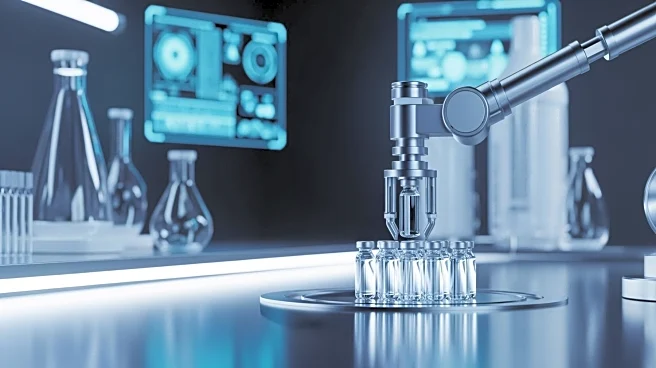
Chemspeed Technologies and SciY have introduced a new Self-Driving Lab (SDL) platform aimed at revolutionizing laboratory operations. This platform integrates automation, analytics, and AI orchestration to streamline research and development (R&D), quality control (QC), and chemical and biomolecular manufacturing workflows. The SDL platform addresses challenges faced by labs due to siloed tools and integration gaps, which often limit efficiency and scalability. By providing a vendor-agnostic integration, the platform unifies modular precision automation, scientific analysis, and lab management software, creating a fully digitized and AI-ready laboratory environment. This development is particularly significant for industries such as pharmaceuticals,
biotech, materials science, and consumer goods, where efficient and scalable lab operations are crucial.
Why It's Important?
The introduction of the Self-Driving Lab platform by Chemspeed and SciY represents a significant advancement in laboratory automation, potentially transforming how labs operate across various industries. By addressing integration challenges and enabling AI-orchestrated experimentation, the platform can enhance data quality and productivity, leading to faster innovation and improved compliance in regulated markets. This development is particularly beneficial for the pharmaceutical and biotech sectors, where efficient R&D and QC processes are critical for bringing products to market. The platform's ability to unify disparate systems and data sources can also reduce operational risks and improve decision-making, offering a competitive edge to organizations that adopt it.
What's Next?
As the Self-Driving Lab platform gains traction, it is likely to attract interest from leading pharmaceutical and biotech companies seeking to enhance their laboratory operations. The platform's vendor-agnostic nature allows for seamless integration with existing lab systems, making it an attractive option for organizations looking to transition to AI-enabled operations. Future developments may include further enhancements to the platform's capabilities, such as expanded analytics and automation features, to meet the evolving needs of the industry. Additionally, as more companies adopt the platform, it could drive broader industry trends towards increased automation and digitalization in laboratory environments.