



What's Happening?
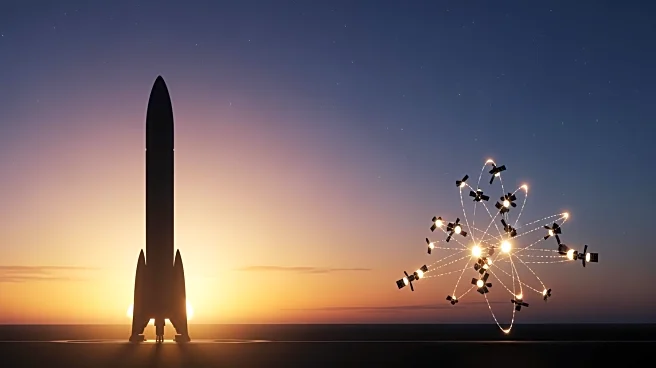
SpaceX successfully launched 29 Starlink satellites into low Earth orbit using a Falcon 9 rocket, marking the 32nd re-flight of its first stage booster. The launch took place on December 8, 2025, from NASA's Kennedy Space Center in Florida. This mission is part of SpaceX's ongoing efforts to expand its Starlink satellite constellation, which aims to provide global broadband internet coverage. The Falcon 9's first stage landed on the droneship 'Just Read the Instructions' in the Atlantic Ocean, further demonstrating SpaceX's commitment to reusable rocket technology. This launch is a significant step towards SpaceX's goal of achieving 40 flights with a single Falcon 9 first stage.
Why It's Important?
The successful re-flight of the Falcon 9 rocket underscores SpaceX's
leadership in reusable rocket technology, which is crucial for reducing the cost of space travel and satellite deployment. By reusing rocket components, SpaceX can lower launch costs, making space more accessible for commercial and governmental purposes. The expansion of the Starlink network is particularly significant as it aims to provide high-speed internet access to underserved and remote areas worldwide, potentially transforming global communications. This development also positions SpaceX as a key player in the burgeoning space economy, with implications for telecommunications, global connectivity, and technological innovation.
What's Next?
SpaceX plans to continue its aggressive launch schedule, with more Starlink missions and other payloads planned in the coming weeks. The company is also working towards its goal of achieving 40 flights with a single Falcon 9 first stage, which would further solidify its position as a leader in reusable rocket technology. As the Starlink network grows, SpaceX will likely face regulatory and competitive challenges, particularly as other companies and nations develop their satellite internet services. The success of these missions will be closely watched by industry stakeholders and could influence future space policy and commercial strategies.