



What's Happening?
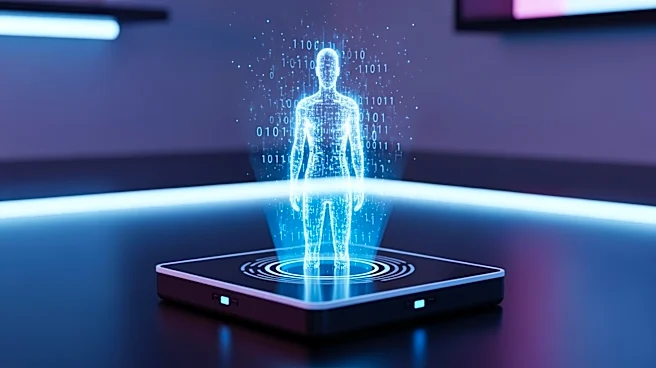
A debate has emerged around the creation of digital clones using artificial intelligence, as celebrities, influencers, and business leaders explore this technology to expand their reach and monetize their presence. The discussion, hosted by Business Insider,
featured Dara Ladjevardian, cofounder and CEO of Delphi, and Will Kreth, founder of Human & Digital and HAND. Ladjevardian argues that digital clones allow creators to broadcast their ideas and engage with audiences more efficiently, potentially serving as a 24/7 mentor. Kreth, however, raises concerns about the authenticity and potential negative impacts on human trust, suggesting that AI cannot yet replicate the novel creativity of human consciousness. The technology is already being used in various media sectors, with AI replicas of public figures like Val Kilmer and Tony Robbins being developed for entertainment and coaching purposes.
Why It's Important?
The rise of AI digital clones presents significant implications for the media and entertainment industries, as well as for personal branding and monetization strategies. For creators, digital avatars offer a new avenue for passive income and audience engagement, potentially transforming how content is delivered and consumed. However, the ethical and authenticity concerns highlighted by Kreth underscore the need for careful consideration of how these technologies are implemented. The potential for parasocial relationships and the blurring of reality with synthetic experiences could impact societal norms and expectations around personal interaction and trust. As AI continues to evolve, the balance between technological advancement and maintaining human authenticity will be crucial.
What's Next?
As the technology for creating digital clones advances, stakeholders in the media and tech industries will need to address the ethical and practical challenges associated with their use. This includes developing frameworks for authentication and consent, as well as implementing safeguards to prevent misuse and protect vulnerable individuals from forming unhealthy attachments to synthetic personas. The debate suggests a growing need for industry standards and regulations to manage the proliferation of digital replicas and ensure they are used responsibly. As more creators and businesses explore this technology, the conversation around its implications will likely intensify, prompting further discussions on the future of AI in personal and professional contexts.
Beyond the Headlines
The development of AI digital clones raises deeper questions about identity and the nature of human interaction in a digital age. As these technologies become more prevalent, they may challenge traditional notions of presence and authenticity, leading to shifts in how individuals perceive and value personal connections. The potential for digital clones to influence public perception and behavior also highlights the need for transparency and accountability in their creation and use. As society navigates these changes, the role of AI in shaping cultural and ethical norms will be a critical area of exploration.