





What's Happening?
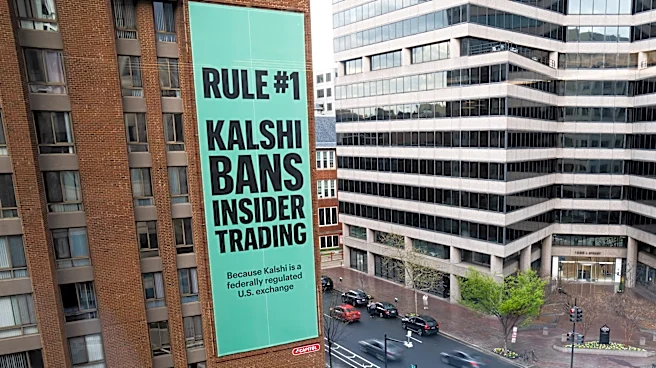
New York State has recently intensified its regulatory actions concerning prediction markets, a burgeoning area of financial speculation. Governor Kathy Hochul signed an executive order prohibiting state employees from using nonpublic information for trading
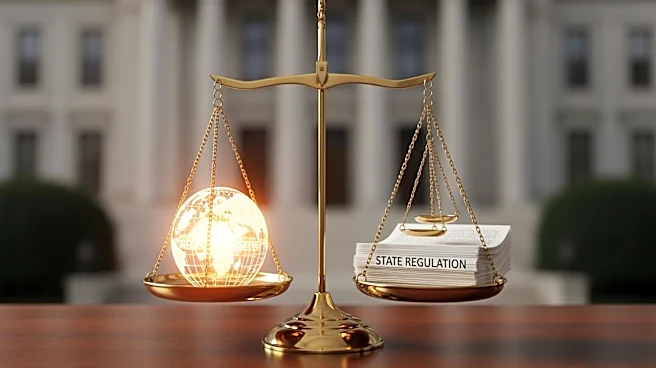
in prediction markets. This move aligns with similar actions in states like Illinois and California, aiming to curb insider trading. Additionally, New York Attorney General Letitia James has filed lawsuits against two cryptocurrency exchanges, accusing them of illegal gambling by offering prediction market platforms. These actions are part of a broader legal debate over whether prediction markets should be regulated as financial derivatives by the Commodity Futures Trading Commission (CFTC) or as gambling products by individual states. The CFTC has asserted its jurisdiction over these markets, leading to a series of lawsuits against states, including New York, Arizona, Connecticut, Illinois, and Wisconsin.
Why It's Important?
The regulatory actions in New York highlight the growing tension between state and federal authorities over the control of prediction markets. These markets, which rely on the 'wisdom of crowds' to forecast events, have raised concerns about insider trading and the appropriate regulatory framework. The outcome of these legal battles could significantly impact how prediction markets operate in the U.S., affecting both the financial industry and state revenues. States that have legalized sports betting, like New York, benefit financially from taxing these activities and may resist federal oversight that could limit their regulatory power. The ongoing legal disputes could lead to a circuit split, potentially fast-tracking the issue to the U.S. Supreme Court for resolution.
What's Next?
As the legal landscape surrounding prediction markets continues to evolve, further actions are anticipated from both state and federal levels. The CFTC is actively pursuing rulemaking processes to establish clearer regulations for these markets. Meanwhile, Congress is considering draft bills to address insider trading and potentially ban prediction markets altogether. The increasing number of lawsuits and regulatory actions suggest that the debate over prediction markets will remain a contentious issue, with significant implications for financial regulation and state-federal relations.
Beyond the Headlines
The legal scrutiny of prediction markets also raises ethical questions about the use of insider information and the potential for market manipulation. As these markets grow, there is a need for robust regulatory frameworks to ensure transparency and fairness. The involvement of high-profile cases, such as the 'Maduro' trades, underscores the potential for abuse and the importance of effective oversight. The resolution of these issues will likely shape the future of prediction markets and their role in the financial ecosystem.