



What's Happening?
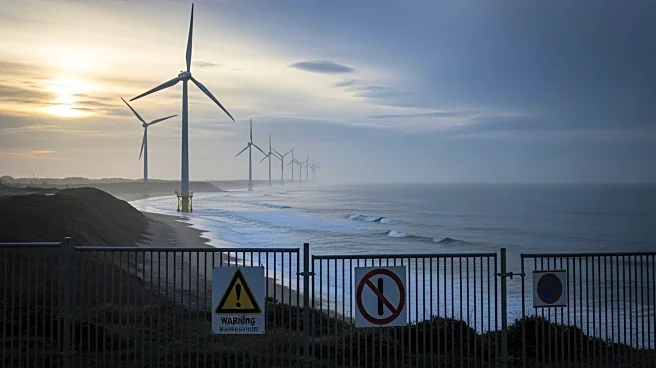
The Trump administration has suspended leases for five major offshore wind projects along the East Coast, citing national security risks identified by the Pentagon. This decision affects projects in Massachusetts, Rhode Island, Connecticut, Virginia, and New York. The administration claims that the projects pose risks due to radar interference caused by the turbine blades and towers. This suspension follows a recent federal court ruling that struck down President Trump's executive order blocking wind energy projects. The Interior Department plans to work with the Defense Department to assess and mitigate these security risks, although no specific end date for the suspension has been provided.
Why It's Important?
The suspension of these wind projects highlights the ongoing
tension between the Trump administration's energy policies and the push for renewable energy development. By halting these projects, the administration is prioritizing national security concerns over the expansion of clean energy infrastructure. This decision could have significant implications for the renewable energy sector, potentially delaying the transition to sustainable energy sources and affecting job creation in the industry. Critics argue that the national security risks are overstated and that the suspension undermines efforts to diversify the U.S. energy supply.
What's Next?
The suspension is likely to face legal challenges from state governments and environmental groups who argue that the decision is unlawful and detrimental to clean energy progress. The administration's actions may also prompt further scrutiny and debate over the balance between national security and renewable energy development. Stakeholders in the wind energy sector will need to navigate these legal and regulatory challenges while advocating for the continuation of these projects.