
What's Happening?
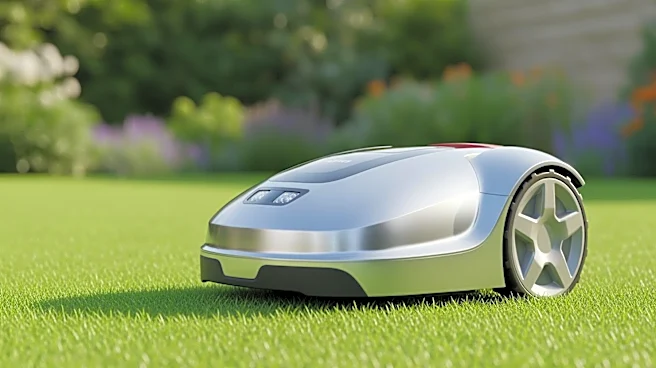
Mammotion has launched new models of robot mowers, the LUBA 3 AWD and LUBA Mini 2 AWD, designed to simplify lawn care with advanced autonomous navigation technology. These mowers eliminate the need for
complex installations, such as boundary wires or RTK antennas, by utilizing a Tri-Fusion navigation system. This system integrates LiDAR, RTK, and camera-based AI vision to provide precise navigation and obstacle avoidance. The LUBA 3 AWD is equipped to handle large properties with its all-wheel-drive system, capable of managing slopes and uneven terrain. It can operate for over three hours per charge, covering up to 0.42 acres. The LUBA Mini 2 AWD, designed for smaller lawns, uses LiDAR for 360-degree scanning, making it suitable for areas with dense tree cover or limited sky visibility. Both models offer customizable mowing zones and schedules through an app, allowing users to tailor their lawn care experience.
Why It's Important?
The introduction of these autonomous mowers represents a significant advancement in the field of automated lawn care, potentially transforming how homeowners maintain their properties. By removing the need for complex setup procedures, Mammotion's mowers make robotic lawn care more accessible to a broader audience. This innovation could lead to increased adoption of robotic mowers, reducing the time and effort required for lawn maintenance. Additionally, the use of advanced navigation technology ensures efficient and precise mowing, which could improve the overall quality of lawn care. The environmental impact is also noteworthy, as these electric mowers offer a quieter and potentially more eco-friendly alternative to traditional gas-powered lawn equipment.
What's Next?
As Mammotion's new models become available, the company may see increased interest from consumers seeking convenient and efficient lawn care solutions. The success of these mowers could prompt further innovations in the industry, with competitors potentially developing similar technologies to keep pace. Additionally, as more homeowners adopt robotic mowers, there may be a shift in the landscaping industry, with professionals focusing on more specialized services that complement automated mowing. The long-term impact on the market will depend on consumer reception and the continued development of autonomous technologies.