








What's Happening?
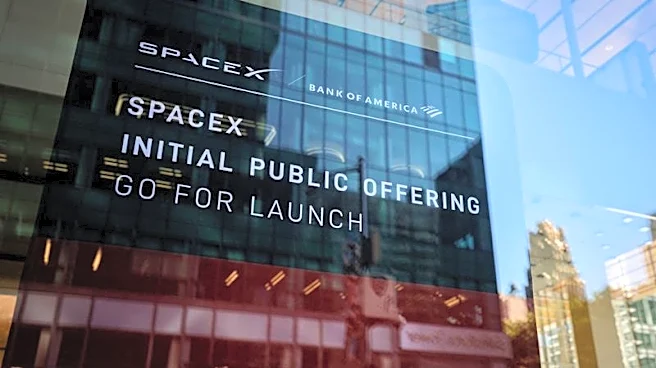
SpaceX, the aerospace company founded by Elon Musk, has successfully gone public, marking a significant milestone for the company and the broader space industry. On June 12, SpaceX sold approximately 555.6 million shares at $135 each in its initial public offering
(IPO), raising $75 billion before expenses. The shares began trading on the Nasdaq exchange at $150 and closed at $160.95, representing a 19.2% increase over the IPO price. This IPO is the largest in stock market history, surpassing the previous record set by Saudi Aramco in 2019. SpaceX has the option to sell an additional 83.3 million shares, potentially raising another $11.25 billion. The decision to go public comes after years of maintaining a private status to focus on long-term goals, such as human missions to Mars. The funds raised will be used to expand SpaceX's AI compute infrastructure, enhance launch capabilities, and increase the scale of its satellite constellations.
Why It's Important?
The successful IPO of SpaceX is a landmark event for the space industry, highlighting the growing interest and investment in space exploration and technology. By going public, SpaceX gains access to significant capital, which will enable it to pursue ambitious projects like orbital data centers and a constellation of data center satellites. This move could accelerate advancements in space technology and infrastructure, potentially leading to new opportunities in artificial intelligence and global communications. The IPO also underscores SpaceX's dominant position in the space launch market and its potential to influence the future of space exploration. Investors and stakeholders in the aerospace and technology sectors stand to benefit from SpaceX's growth and innovation, while the company's success may inspire further investment in space-related ventures.
What's Next?
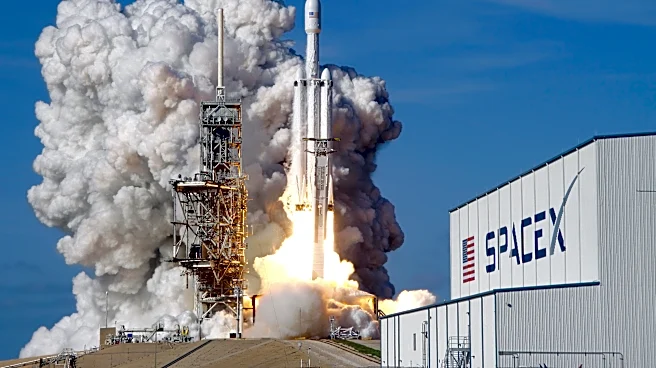
Following the IPO, SpaceX plans to focus on several key initiatives, including the development of its Starship vehicle and the expansion of its Starlink satellite network. The company aims to conduct additional test flights of the Starship, with the potential for an orbital test flight in the near future. SpaceX also intends to launch its first Starlink V3 satellites on the Starship later this year. These developments are expected to enhance SpaceX's capabilities in satellite communications and space exploration. As the company continues to innovate and expand, it may face increased scrutiny from investors and regulatory bodies, particularly regarding its financial performance and long-term strategic goals. The success of SpaceX's initiatives could have far-reaching implications for the space industry and related sectors.