




What's Happening?
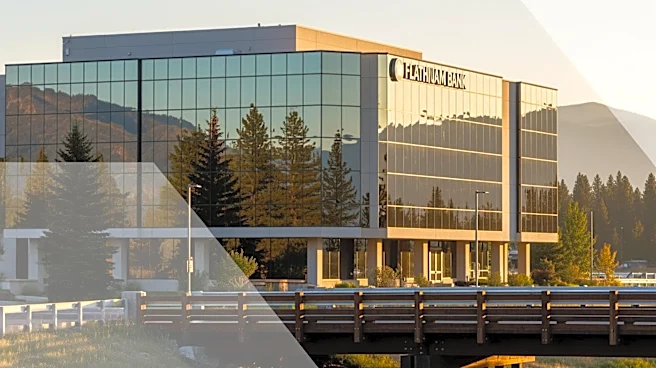
Glacier Bank, a key player in northwest Montana's financial sector, is experiencing significant growth in its commercial lending portfolio, which now constitutes 70% of its operations. This expansion is largely driven by the region's population increase
and commercial development, particularly in north Kalispell. The bank's net income surged by 51% year-over-year, reaching $82.1 million in the first quarter of 2026. This growth reflects a broader trend in the Flathead Valley, where the financial and professional services sector has become a major economic driver, replacing traditional industries like logging and manufacturing. The sector now employs over 66,000 Montanans, accounting for 13% of statewide jobs, and has been growing at an average rate of 2.4% annually over the past decade.
Why It's Important?
The expansion of Glacier Bank and the financial sector in the Flathead Valley highlights a significant economic shift in the region. As traditional industries decline, the rise of white-collar jobs in banking, real estate, and professional services is reshaping the local economy. This transition is crucial for sustaining economic growth and providing higher-wage employment opportunities. The financial sector's growth also underscores the importance of adapting to demographic changes and leveraging in-migration to fuel economic development. The success of institutions like Glacier Bank is indicative of the region's ability to attract and retain skilled professionals, which is essential for long-term economic stability.
What's Next?
As the financial and professional services sector continues to expand, the demand for a highly trained workforce will increase. The Montana Department of Labor and Industry projects 6,700 annual job openings in this sector over the next decade, with a significant need for administrative roles. This growth will likely lead to further investments in education and training programs to ensure a steady supply of qualified workers. Additionally, the continued success of Glacier Bank and similar institutions may encourage further commercial development and attract more businesses to the region, potentially leading to increased economic diversification and resilience.
Beyond the Headlines
The shift towards a more professional economy in the Flathead Valley also raises questions about the future of rural areas traditionally reliant on natural resources. As the financial sector grows, the natural resources sector, including forestry, faces challenges due to declining demand and lower product prices. This transition may necessitate policy interventions to support affected workers and communities. Moreover, the increasing reliance on white-collar jobs could lead to greater economic disparities between urban and rural areas, highlighting the need for balanced regional development strategies.