



What's Happening?
In the evolving field of wildlife photography, the balance between technological advancements and traditional photographic skills is under scrutiny. With the advent of advanced cameras, AI-driven autofocus, and sophisticated editing software, photographers
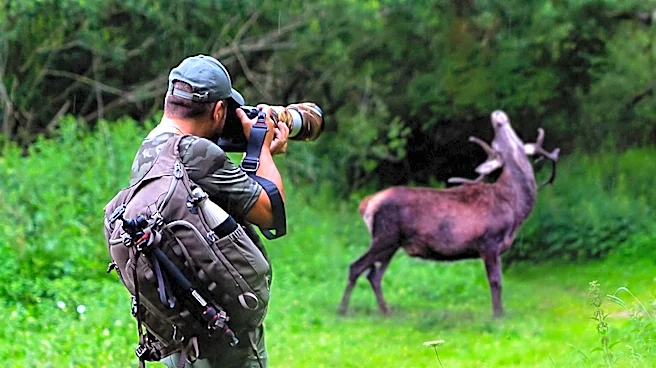
can produce high-quality images with less effort. However, Johan J. Botha, a seasoned wildlife photographer, argues that core skills such as understanding animal behavior, patience, and anticipation remain crucial. While technology offers tools like high-speed burst rates and animal-eye tracking, the essence of capturing extraordinary wildlife images lies in the photographer's ability to anticipate and capture moments with precision.
Why It's Important?
This discussion highlights a broader debate in photography and other creative fields about the role of technology versus human skill. As technology becomes more advanced, there is a risk that reliance on automated tools could overshadow the development of fundamental skills. For wildlife photographers, this could mean a shift from intentional, skill-based photography to a more reactive approach. The implications extend beyond photography, as similar trends are observed in various industries where technology is rapidly advancing.
What's Next?
As technology continues to evolve, photographers and other creatives may need to find a balance between leveraging new tools and maintaining traditional skills. This could involve using technology to enhance rather than replace core competencies. The future of wildlife photography may see a blend of advanced technology and deep field knowledge, allowing photographers to capture more meaningful and impactful images.
Beyond the Headlines
The ethical considerations of relying heavily on technology in creative fields are significant. There is a risk that the art of photography could be diminished if technology becomes the primary driver of image creation. This raises questions about the value of human creativity and the role of technology in artistic expression. As the industry evolves, these discussions will be crucial in shaping the future of photography and other creative disciplines.