





What's Happening?
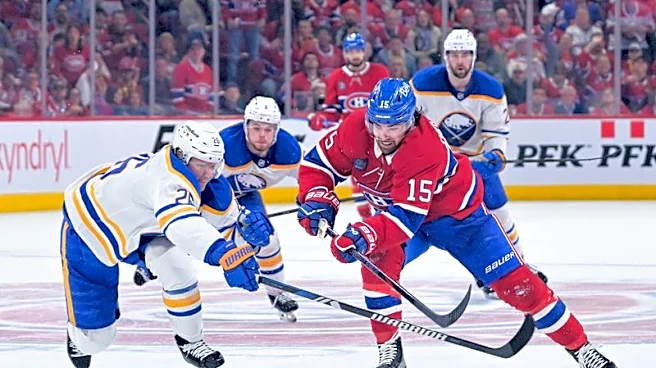
During a recent NHL game, Buffalo Sabres player Jordan Greenway faced criticism for continuing to play without a stick during a penalty kill against the Montreal Canadiens. The incident occurred when the Sabres were already down a player, and Greenway's
lack of a stick left him unable to effectively participate in the play, leading to a goal by the Canadiens. This situation sparked debate among fans and analysts about whether Greenway should have left the ice to retrieve a new stick, potentially leaving the team at a temporary 5-on-3 disadvantage. The discussion highlights the strategic decisions teams must make during high-pressure moments in games.
Why It's Important?
The incident with Jordan Greenway underscores the critical nature of decision-making in professional sports, particularly in high-stakes situations like penalty kills. The choice between maintaining a full complement of players on the ice versus ensuring all players are fully equipped can significantly impact game outcomes. This debate also reflects broader strategic considerations in hockey, where teams must balance immediate risks with potential long-term benefits. The situation has implications for coaching strategies and player training, as teams may need to reassess their approaches to similar scenarios in future games.
What's Next?
While it is unlikely that the Sabres will change their approach based on this single incident, the debate may influence future coaching decisions and player training. Teams might consider developing protocols for handling equipment failures during critical moments, potentially experimenting with different strategies in practice sessions. Additionally, this incident could prompt discussions within the NHL about best practices for managing similar situations, potentially leading to changes in how teams are coached to respond to equipment issues during games.