





What's Happening?
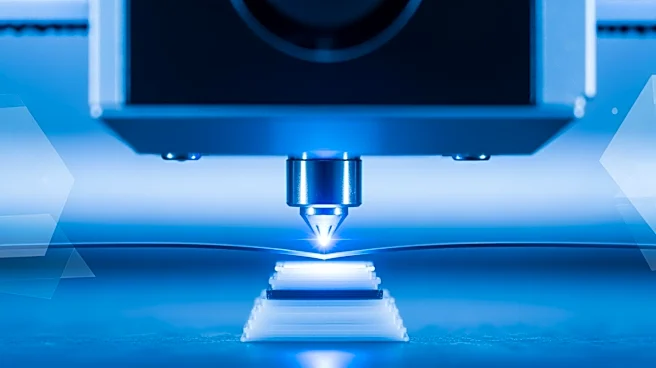
Recent developments in additive manufacturing have enabled the production of bio-concrete, a sustainable alternative to traditional concrete, which is a significant contributor to global CO2 emissions. The process involves microbially induced calcium
carbonate precipitation (MICP), where bacteria mixed with sand and gravel are solidified using a cementation solution containing calcium ions and urea. This method not only reduces the carbon footprint of concrete production but also allows for the creation of bespoke geometries through 3D printing. The research highlights the use of Sporosarcina pasteurii, a bacterium known for its high urease activity, which facilitates the precipitation of calcium carbonate, essential for the solidification process. Despite the promise of this technology, challenges remain, particularly in ensuring the compressive strength of the printed structures meets industry standards for structural applications.
Why It's Important?
The development of bio-concrete through additive manufacturing represents a significant step towards reducing the environmental impact of the construction industry, which is responsible for approximately 8% of global CO2 emissions. By utilizing MICP, this method offers a low-carbon alternative to traditional cement, potentially transforming the way buildings and infrastructure are constructed. The ability to produce complex shapes with reduced material usage could lead to more efficient and sustainable architectural designs. However, the technology must overcome challenges related to the strength and durability of the materials to be viable for widespread use in construction. Success in this area could lead to significant reductions in emissions and resource consumption, aligning with global sustainability goals.
What's Next?
Future research and development will likely focus on overcoming the current limitations of bio-concrete, particularly in achieving the necessary compressive strength for structural applications. This may involve optimizing the particle size distribution and compaction techniques to enhance the material's load-bearing capabilities. Additionally, further exploration into the scalability of this technology for large-scale construction projects is essential. As the industry seeks to adopt more sustainable practices, collaboration between researchers, construction companies, and policymakers will be crucial in advancing the adoption of bio-concrete and similar innovations.
Beyond the Headlines
The shift towards bio-concrete and similar sustainable materials could have broader implications for the construction industry, including changes in regulatory standards and building codes to accommodate new materials and methods. This transition may also influence the economic landscape, as companies investing in sustainable technologies could gain a competitive edge. Moreover, the cultural perception of construction and architecture might evolve, with increased emphasis on environmental responsibility and innovation. Long-term, these developments could contribute to a more sustainable and resilient built environment, addressing both environmental and societal challenges.