

What's Happening?
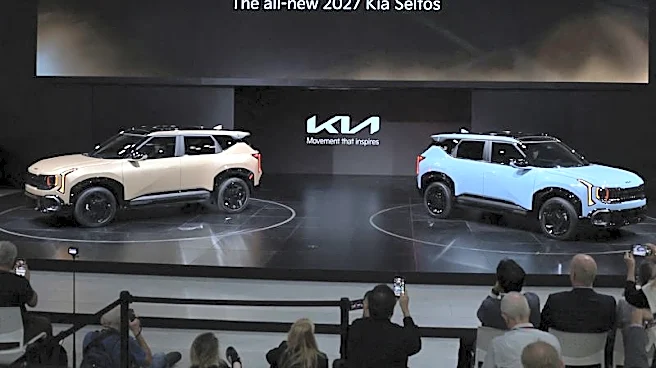
Automakers are increasingly turning to artificial intelligence (AI) to address various challenges in the industry, including tariffs, supply chain disruptions, and competition from China. At the New York Auto Show, executives from major companies like
Nissan, Hyundai, Toyota, Ford, and GM highlighted their efforts to use AI to shorten vehicle development timelines. Traditionally, developing a new vehicle could take four to six years, but companies are now aiming to reduce this to as little as 30 months for vehicles built on the same platform. This shift is driven by the need to respond more quickly to changing consumer demands and global market disruptions. Additionally, automakers are collaborating more frequently to share costs and resources, as seen in partnerships like Toyota and Subaru's joint EV projects.
Why It's Important?
The adoption of AI in vehicle development is significant as it could transform how automakers design, build, and sell cars, making them more agile and responsive to market changes. This is crucial in an industry facing rising costs and competitive pressures. By reducing development times, automakers can bring new models to market faster, potentially gaining a competitive edge. The trend towards collaboration among automakers also highlights the increasing need for efficiency and cost-sharing in a challenging economic environment. These changes could lead to more affordable and innovative vehicle options for consumers, particularly as companies reconsider the production of smaller, more efficient sedans.
What's Next?
As automakers continue to integrate AI into their development processes, the industry may see a shift towards more collaborative projects and partnerships. This could lead to further consolidation in the market, with smaller companies potentially struggling to compete independently. The focus on AI and collaboration may also drive innovation in vehicle design and features, as companies seek to differentiate themselves in a competitive market. Additionally, the return of sedans and the emphasis on efficiency could influence consumer preferences and purchasing decisions in the coming years.