
What's Happening?
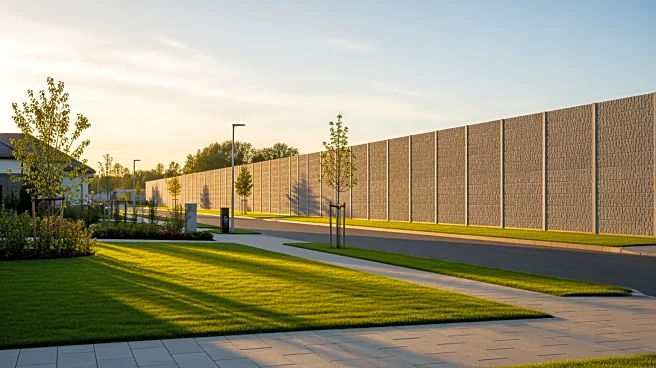
A recent study by the National Bureau of Academic Research has found that homes located near highway sound barriers experience significant increases in property value. The research examined nearly 600,000
residential properties in Florida and discovered that homes within approximately 1,000 feet of newly constructed sound barriers saw a price increase of nearly 7% over five years. This increase in value diminishes with distance, becoming negligible beyond a quarter mile. The study highlights that buyers are willing to pay a premium for quieter surroundings, with property values rising by nearly 1% for every decibel of traffic noise reduced. The research also suggests that traffic noise currently suppresses U.S. residential property values by about $110 billion.
Why It's Important?
The findings of this study have significant implications for urban planning and real estate markets. By demonstrating the financial benefits of reducing traffic noise, the study provides a compelling case for the construction of more sound barriers in urban areas. This could lead to increased investment in infrastructure projects aimed at noise reduction, potentially boosting property values and improving quality of life for residents. Additionally, the study's insights into the impact of electric vehicles on property values could influence future transportation policies, as quieter engines could further enhance real estate markets by reducing noise pollution.
What's Next?
As the adoption of electric vehicles continues to grow, the study suggests that the quieter engines could lead to a nationwide increase in property values by more than $77 billion. This potential boost in real estate markets may encourage policymakers to support the transition to electric vehicles and invest in noise-reducing infrastructure. Real estate developers and urban planners might also prioritize projects that incorporate sound barriers, recognizing the added value they bring to nearby properties.