



What's Happening?
Cartwheel, a new animation startup founded by Andrew Carr and Jonathan Jarvis, is leveraging AI to revolutionize the animation industry. The company focuses on 'open-ended storytelling' and 'open-ended world-building,' allowing characters to react and perform
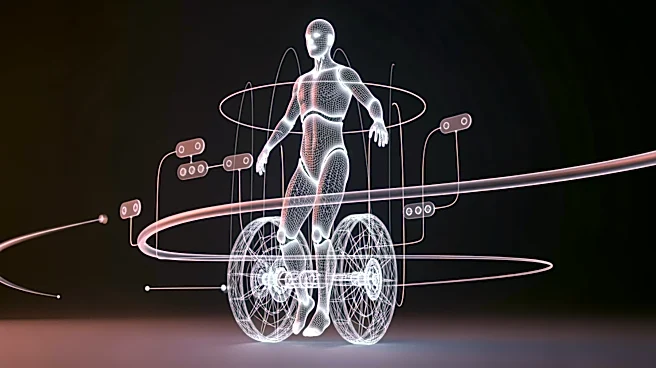
in real-time rather than following pre-set moves. Cartwheel's approach involves mapping human motion to create realistic 3D skeletons from simple 2D videos, providing animators with greater control over the creative process. The startup aims to bridge the gap between 2D vision and 3D execution, making animation more personal and accessible by automating technical tasks while preserving artistic intent.
Why It's Important?
Cartwheel's innovative approach to animation addresses the growing demand for content in gaming and social media, where manual animation cannot keep pace. By providing a 'control layer' for AI-generated content, Cartwheel empowers creators to edit and manipulate animations, reducing the 'sameness' often associated with AI-generated media. This shift from flat images to 3D assets enhances creative freedom and allows for more dynamic storytelling. As animation becomes more automated, Cartwheel's technology could democratize the industry, enabling more artists to produce high-quality content without extensive technical expertise.
What's Next?
Cartwheel plans to continue developing its AI models to support open-ended storytelling and world-building. The company envisions a future where 3D animation becomes the standard, even for projects initially authored in 2D. As Cartwheel's technology evolves, it may attract partnerships with major gaming and media companies seeking to enhance their content creation capabilities. The startup's focus on real-time character performance could lead to new interactive experiences in gaming and virtual reality, further expanding the possibilities for immersive storytelling.
Beyond the Headlines
Cartwheel's approach to animation highlights the potential for AI to enhance rather than replace human creativity. By automating technical tasks, the company allows artists to focus on the emotional and narrative aspects of their work. This balance between machine efficiency and human artistry could redefine the animation industry, fostering a new era of personalized and engaging content. As AI continues to advance, the ethical implications of its use in creative fields will require careful consideration to ensure that technology serves as a tool for artistic expression rather than a substitute for human creativity.