



What's Happening?
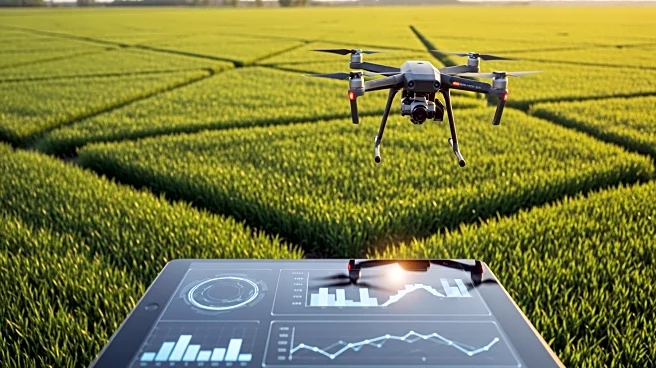
The global smart farming market is anticipated to grow significantly, reaching USD 22.45 billion by 2031, up from USD 11.12 billion in 2022. This growth is driven by the increasing adoption of precision agriculture technologies, which aim to improve crop yields and resource efficiency. The integration of IoT, AI, and data analytics in farming operations is accelerating market expansion. Key developments include Deere & Company's launch of an AI-driven precision planting system and Trimble Inc.'s introduction of a drone-based multispectral imaging platform for crop health monitoring. These innovations are enhancing seed placement accuracy and reducing chemical use, respectively. Additionally, AGCO Corporation's smart irrigation controller is optimizing
water usage in California and Texas. The market is further supported by government initiatives, labor shortages, and the expanding use of smart sensors, drones, and automated irrigation systems.
Why It's Important?
The growth of the smart farming market is crucial for addressing global food demand, which is expected to rise due to population growth. Precision agriculture technologies enable efficient and sustainable farming practices, optimizing resource use and boosting crop yields. This is particularly important in the face of climate variability and labor shortages. The integration of digital technologies enhances supply chain transparency and farm productivity, reducing environmental impact. North America leads the market with a significant share, driven by early adoption of precision agriculture technologies and strong government support. The expansion of smart farming solutions is expected to improve operational efficiency and sustainability in agriculture, benefiting both large-scale and smallholder farms.
What's Next?
The smart farming market is poised for continued growth, with advancements in IoT, AI, and robotics driving precision farming. The focus on sustainability and efficient resource use will likely lead to further innovations in smart greenhouses and livestock monitoring systems. As the market expands, companies may pursue mergers and acquisitions to enhance their smart farming portfolios. Government subsidies and initiatives will continue to support the deployment of smart machinery and automation in farming operations. The integration of blockchain and data analytics is expected to further enhance supply chain transparency and farm productivity.