
What's Happening?
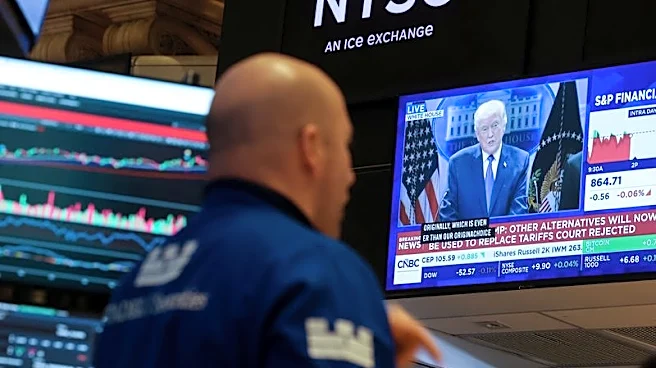
General Motors (GM) announced it anticipates receiving a $500 million refund from tariffs deemed illegal by the Supreme Court. This development follows a ruling that the International Emergency Economic
Powers Act did not authorize President Trump to impose such tariffs unilaterally. The automaker plans to adjust its full-year profit forecast upwards by $500 million, as stated by CEO Mary Barra in a letter to shareholders. The refund is part of a broader initiative where the federal government has opened a portal for companies to reclaim tariff payments. GM is among over 330,000 importers affected by these tariffs, which collectively amounted to $166 billion. The tariffs reportedly cost the average American household $700 last year.
Why It's Important?
The Supreme Court's decision and the subsequent refund process have significant implications for U.S. businesses and the economy. For GM, the refund represents a substantial financial boost, allowing the company to enhance its profit outlook amid challenging market conditions, such as rising gas prices. More broadly, the ruling underscores the limits of executive power in trade policy, potentially influencing future tariff implementations. The refund process could also alleviate financial burdens on numerous companies, potentially leading to increased investments and economic activity. However, the initial imposition of these tariffs had already impacted consumer costs and business operations, highlighting the complex interplay between trade policy and economic health.
What's Next?
As companies begin to apply for refunds, the process's efficiency and transparency will be closely monitored. Businesses may adjust their financial strategies based on the anticipated refunds, potentially leading to increased investments or expansions. Additionally, the ruling may prompt legislative or executive actions to clarify the scope of presidential powers in trade matters. Stakeholders, including policymakers and industry leaders, will likely engage in discussions on balancing national economic interests with global trade dynamics.