



What's Happening?
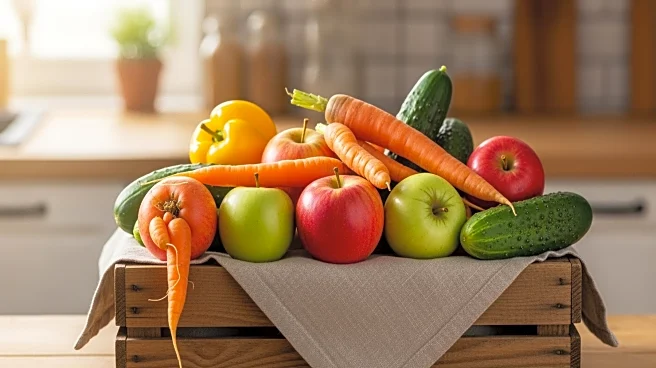
Misfits Market, an online grocery store, is tackling the issue of food waste by purchasing produce rejected by traditional grocery stores due to imperfections. Founded by Abhi Ramesh in 2018, the company packages these fruits and vegetables in warehouses across the United States and sells them at discounted prices. This initiative comes in response to the staggering amount of food waste in the U.S., where grocery stores reject over 20 billion pounds of produce annually, valued at more than $17 billion. Misfits Market has saved 200 million pounds of food from being discarded, providing consumers with affordable and diverse food options.
Why It's Important?
The efforts of Misfits Market are significant in addressing the dual challenges of food waste and food accessibility.
By redirecting rejected produce to consumers, the company not only reduces waste but also offers affordable food options to millions of Americans. This approach helps farmers by providing a market for produce that would otherwise be discarded, and it supports consumers facing rising food prices. The initiative highlights the potential for innovative solutions in the food industry to create a more sustainable and equitable food system.
What's Next?
Misfits Market aims to continue expanding its operations and reach more consumers across the country. As awareness of food waste grows, similar initiatives may emerge, potentially influencing grocery store practices and consumer habits. The company’s success could encourage more businesses to explore sustainable models that address food waste and accessibility, fostering a shift towards a more responsible food ecosystem.
Beyond the Headlines
The work of Misfits Market also touches on broader ethical and environmental issues. By reducing food waste, the company contributes to environmental sustainability, as less waste means reduced landfill use and lower greenhouse gas emissions. Additionally, the initiative raises awareness about the importance of valuing all food, regardless of appearance, and challenges societal norms about food aesthetics and consumption.