




What's Happening?
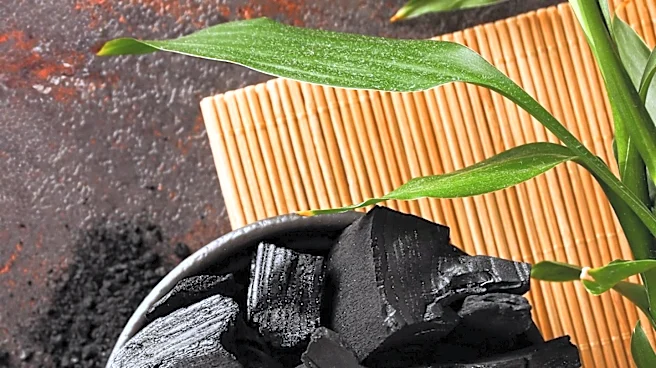
Researchers have developed an internally heated pyrolysis system that produces cleaner biochar, suitable for agricultural applications. The system uses reed straw pellets and operates as a quasi-moving-bed reactor, allowing for efficient heat transfer
and reduced production costs. The study, conducted by Hongbin Cong's team, tested various pyrolysis temperatures and air distribution rates to optimize biochar quality. The resulting biochar demonstrated low toxic risk and strong functional properties, making it ideal for soil improvement and carbon sequestration. The research highlights the potential for this technology to enhance biochar production while minimizing environmental impact.
Why It's Important?
The development of a cleaner biochar production system is significant for the agricultural sector, as it offers a sustainable solution for soil enhancement and carbon management. Biochar's ability to improve soil health and sequester carbon can contribute to climate change mitigation efforts. The new pyrolysis system's efficiency and reduced contaminant levels make it a viable option for large-scale agricultural use, potentially transforming waste biomass into valuable resources. This innovation aligns with global efforts to promote sustainable agriculture and reduce greenhouse gas emissions, offering economic and environmental benefits.
What's Next?
Future research will likely focus on further optimizing the pyrolysis process to balance biochar quality with energy efficiency. The technology's scalability and integration into existing agricultural practices will be key considerations for widespread adoption. Collaboration with agricultural stakeholders and policymakers will be essential to promote the benefits of biochar and encourage its use in sustainable farming practices. As the technology advances, it may also open new markets for biochar products, supporting economic growth in the green technology sector.