
What's Happening?
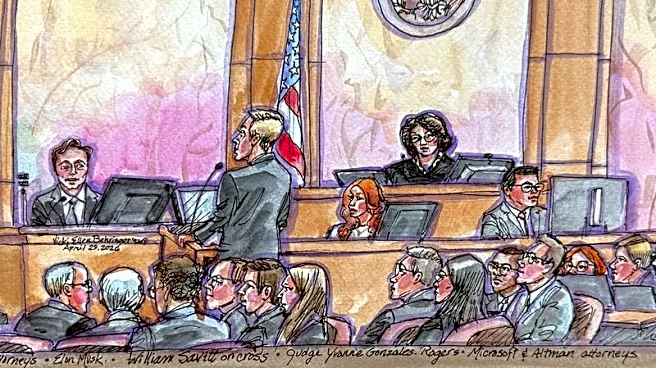
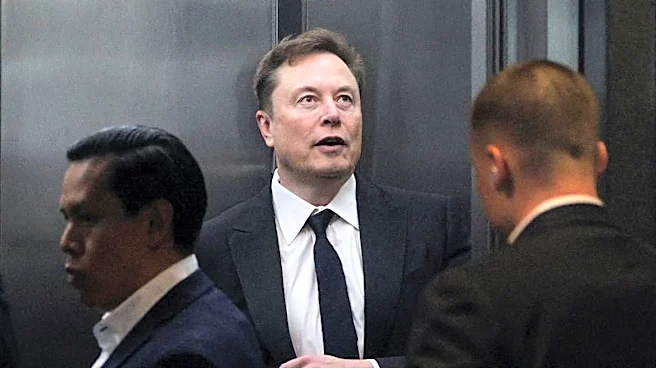
Elon Musk has taken the stand in a federal court in Oakland, California, as part of his lawsuit against OpenAI. Musk accuses Sam Altman, his former AI partner, of deceiving him into donating $38 million
to OpenAI's nonprofit, only for the organization to abandon its mission of developing AI for the benefit of humanity. Musk is seeking billions in damages and demands that Altman step down from his position in the for-profit entity. The courtroom has been a hub of activity, with protesters against both Musk and AI present daily. The trial has drawn significant attention, with Musk and Altman both attending in person, despite the security risks and their busy schedules.
Why It's Important?
This lawsuit highlights the ongoing tensions and ethical considerations in the rapidly evolving field of artificial intelligence. Musk's claims against OpenAI underscore the challenges of balancing profit motives with ethical AI development. The outcome of this case could have significant implications for the tech industry, particularly in how AI companies are structured and governed. It also raises questions about the responsibilities of tech leaders in ensuring their innovations align with broader societal benefits. The case is being closely watched by industry stakeholders, as it may set precedents for future disputes in the tech sector.
What's Next?
As the trial progresses, the focus will be on the testimonies of key figures like Musk and Altman. The court's decision could influence the future direction of OpenAI and similar organizations. If Musk succeeds, it may lead to increased scrutiny of AI companies and their governance structures. The tech community will be watching closely to see how this case impacts the relationship between nonprofit and for-profit entities in the AI space. Additionally, the trial may prompt discussions on the ethical responsibilities of tech leaders and the role of AI in society.
Beyond the Headlines
The case also brings to light the cultural and ethical dimensions of AI development. It raises questions about the transparency and accountability of tech companies, especially those involved in AI. The public's perception of AI and its potential risks is a critical factor, as evidenced by the presence of anti-AI protesters. This trial could influence public opinion and policy-making regarding AI, potentially leading to stricter regulations and oversight. The legal battle also highlights the personal dynamics and rivalries among tech titans, which can significantly impact the industry's direction.