





What's Happening?
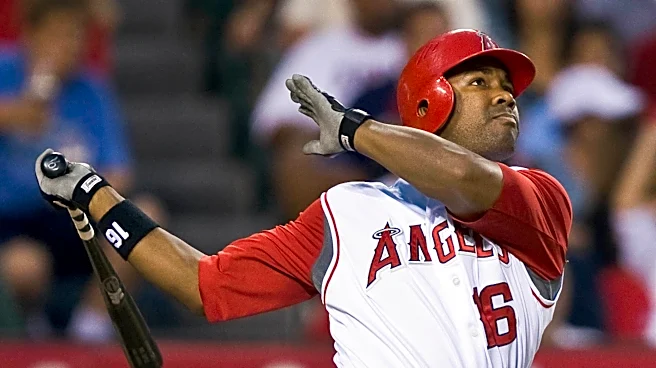
Garret Anderson, a celebrated former player of the Los Angeles Angels, passed away at the age of 53, as announced by the team on April 17, 2026. Anderson, who played 17 seasons in Major League Baseball, was a key figure in the Angels' 2002 World Series
victory and held multiple franchise records. The Angels paid tribute to Anderson by cutting his initials into the outfield at Angel Stadium and playing a three-minute video highlighting his career achievements. Anderson was a three-time All-Star and was inducted into the Angels Hall of Fame. His career included notable achievements such as being named All-Star Game MVP in 2003 and winning the Silver Slugger Award in 2002 and 2003.
Why It's Important?
Garret Anderson's passing marks the loss of a significant figure in the history of the Los Angeles Angels and Major League Baseball. His contributions to the sport, particularly during the Angels' successful 2002 season, have left a lasting impact on the franchise and its fans. Anderson's records and achievements highlight his role in elevating the team's status and success during his tenure. The tributes paid by the Angels reflect the deep respect and admiration held for Anderson by the organization and its supporters, underscoring his influence on the team's legacy.
What's Next?
The Angels' tribute to Garret Anderson may inspire further commemorations and celebrations of his career and contributions to the sport. Fans and former teammates may continue to honor his memory through various events and initiatives. The organization may also consider additional ways to preserve Anderson's legacy, such as establishing scholarships or community programs in his name. The impact of Anderson's career may also be reflected in future discussions about the history and development of the Angels as a franchise.
Beyond the Headlines
Garret Anderson's career and legacy extend beyond his on-field achievements, reflecting broader themes of dedication, professionalism, and loyalty in sports. His decision to pursue a career in MLB over college sports highlights the choices athletes face in balancing education and professional opportunities. Anderson's influence on the Angels and his role in their success during the early 2000s may serve as a case study in sports management and team dynamics. His passing also prompts reflection on the cultural and emotional connections between athletes and their communities.