

What's Happening?
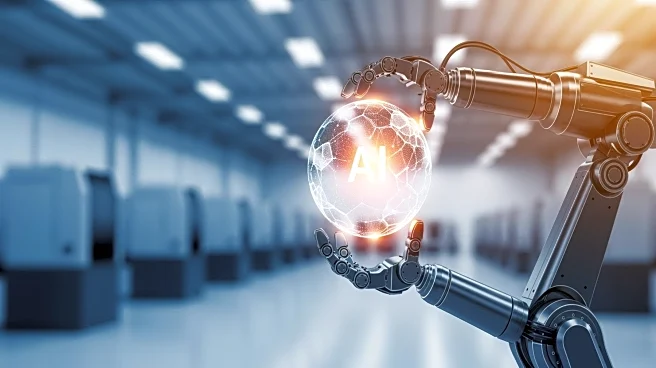
Qasar Younis, CEO of Applied Intuition, a $15 billion AI company, has stated that the most significant impact of AI in the coming years will be on physical industries such as farming, mining, and trucking. Younis emphasized that while AI tools are popular
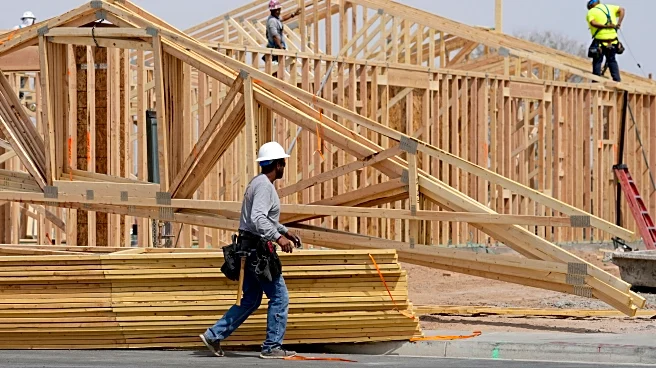
among developers, their real transformative potential lies in enhancing existing machinery in these sectors. This shift is driven by labor shortages, with industries like trucking and farming facing a dearth of workers. Applied Intuition is actively testing autonomous trucks in Japan and exploring AI applications in mining to improve safety and efficiency. The company believes that AI will help fill labor gaps rather than replace jobs entirely.
Why It's Important?
The integration of AI into physical industries could address critical labor shortages, particularly as the workforce ages and fewer individuals enter these fields. This development is crucial for maintaining productivity and efficiency in sectors that are foundational to the economy. The potential for AI to alleviate labor shortages without entirely displacing jobs could also mitigate fears of widespread unemployment due to automation. Furthermore, the focus on physical industries highlights a shift in AI's application from purely digital environments to tangible, real-world scenarios, potentially leading to significant economic and societal benefits.
What's Next?
As AI continues to be integrated into physical industries, companies like Applied Intuition may expand their testing and deployment of autonomous technologies. This could lead to increased investment in AI solutions tailored to specific industry needs. Additionally, there may be a push for regulatory frameworks to ensure the safe and ethical use of AI in these sectors. Stakeholders, including industry leaders and policymakers, will likely engage in discussions to balance technological advancement with workforce implications.