

What's Happening?
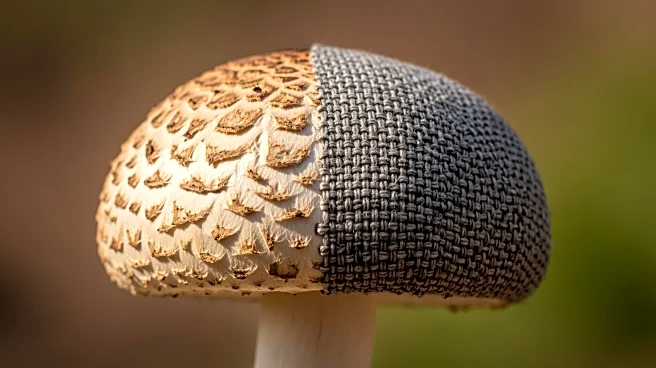
Mushrooms, specifically their mycelium, are being utilized in innovative ways to create sustainable materials across various industries. Companies like Ecovative are leading this transformation by using mycelium to produce biodegradable packaging, luxury leather, and plant-based foods such as MyBacon. This process involves growing mycelium on agricultural waste, which is then molded into various products. The mycelium acts as a natural binder, creating materials that are lightweight, compostable, and environmentally friendly. These innovations are not limited to Earth; NASA is exploring the use of mycelium for building habitats on the Moon and Mars. The versatility of mycelium extends to architecture, where it is used in building materials and insulation,
and even in robotics as living sensors.
Why It's Important?
The use of mycelium as a sustainable material has significant implications for reducing environmental impact. By replacing traditional materials like plastic and leather, mycelium-based products offer a lower carbon footprint and are biodegradable, addressing the growing demand for eco-friendly alternatives. This shift could lead to a reduction in reliance on fossil fuels and decrease waste in landfills. The potential for mycelium to be used in space exploration highlights its versatility and the possibility of sustainable living beyond Earth. Additionally, the development of plant-based foods like MyBacon caters to the increasing consumer demand for meat alternatives, contributing to a more sustainable food industry.
What's Next?
The continued expansion of mycelium-based products is likely, with further research and development enhancing their applications. As more industries adopt these materials, we can expect increased investment in biotechnology and sustainable practices. Regulatory support and consumer demand will play crucial roles in the widespread adoption of mycelium products. In space exploration, successful trials of mycelium growth in microgravity could pave the way for its use in constructing habitats on other planets, potentially revolutionizing space missions.
Beyond the Headlines
The integration of mycelium into various industries represents a shift towards a circular economy, where products are designed to be reused and recycled. This approach not only benefits the environment but also promotes economic sustainability by creating new markets and job opportunities in biotechnology. The ethical implications of reducing animal-based products and minimizing environmental harm align with growing societal values towards sustainability and conservation.