







What's Happening?
A webinar scheduled for June 23, 2026, aims to tackle the growing backlogs in the aerospace and defense sectors. The event will focus on the disconnect between engineering and manufacturing processes, which is identified as a key factor contributing to these
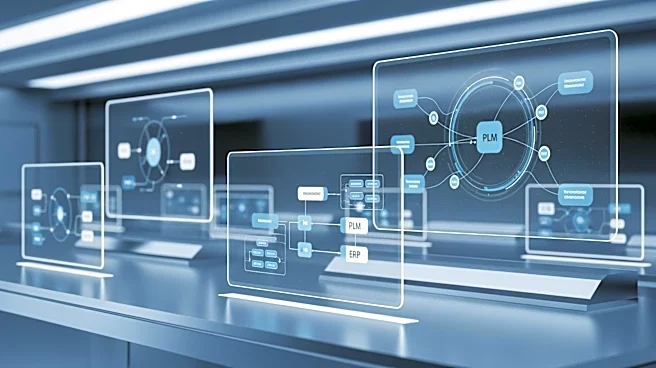
backlogs. The webinar will explore how integrating Product Lifecycle Management (PLM) and Enterprise Resource Planning (ERP) systems can streamline operations. By creating a digital thread that synchronizes product definitions, manufacturing planning, and execution, companies can reduce errors and accelerate change propagation. This integration is expected to convert backlogs into predictable outputs, thereby enhancing throughput. The session will feature insights from Jason Boone, Global Director Federal, Aerospace & Defense PLM at PTC, and will be moderated by Mike McClary, a writer and editor at Aviation Week.
Why It's Important?
The integration of PLM and ERP systems is crucial for the aerospace and defense industries, which are currently facing significant backlogs. These backlogs can lead to delays, increased costs, and lost business opportunities. By addressing the root causes of these issues, the webinar aims to provide industry leaders with strategies to improve efficiency and productivity. The successful implementation of a connected PLM-ERP system could set a new standard for operational excellence in these sectors. This development is particularly important as it could lead to more timely delivery of aerospace and defense products, thereby enhancing competitiveness and customer satisfaction.
What's Next?
Following the webinar, companies in the aerospace and defense sectors may begin to evaluate their current systems and consider adopting the integrated PLM-ERP approach. This could lead to a wave of technological upgrades and process improvements across the industry. Stakeholders, including manufacturers and suppliers, might collaborate more closely to ensure seamless integration and data sharing. Additionally, the insights gained from the webinar could influence future industry standards and best practices, potentially leading to widespread adoption of these technologies.