





What's Happening?
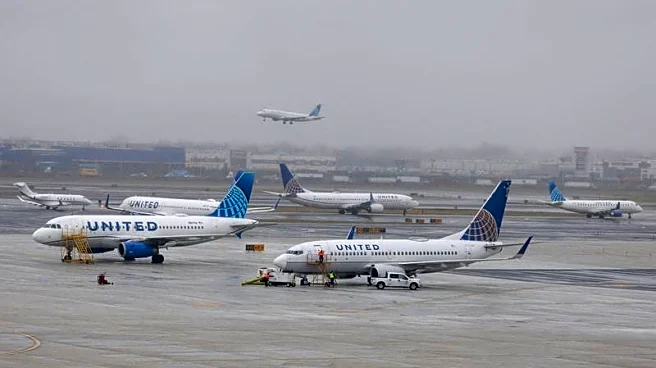
United Airlines CEO Scott Kirby has highlighted engine shortages as a significant constraint for the airline industry in the coming years. Speaking at the International Air Transport Association (IATA) Annual General Meeting in Rio de Janeiro, Kirby criticized
aircraft manufacturers Boeing and Airbus for producing planes that rely on a single engine type. This issue has been exacerbated by United's recent cancellation of an A350 order due to a contract dispute with Rolls Royce, the sole engine supplier for that aircraft. Kirby emphasized the need for competition in engine manufacturing to prevent similar issues in the future. The airline industry is currently facing challenges with engine reliability and supply chain disruptions, which have led to aircraft groundings and hindered growth.
Why It's Important?
The warning from United Airlines' CEO underscores a critical challenge facing the aviation industry, which could have far-reaching implications for airline operations and growth. Engine shortages and reliability issues can lead to increased operational costs, flight cancellations, and delays, affecting both airlines and passengers. The reliance on a single engine supplier, as seen in the United-Rolls Royce dispute, highlights the risks of limited competition in the aerospace supply chain. This situation could prompt airlines to reconsider their procurement strategies and push for more diversified and competitive engine options. The broader impact on the aviation industry could include increased pressure on manufacturers to innovate and improve engine reliability, as well as potential regulatory scrutiny to ensure fair competition and supply chain resilience.
What's Next?
In response to these challenges, airlines may seek to diversify their engine suppliers and advocate for more competitive practices in the aerospace industry. Manufacturers like Boeing and Airbus might face increased pressure to offer multiple engine options for their aircraft models. Additionally, regulatory bodies could become more involved in overseeing supply chain practices to prevent monopolistic scenarios. The ongoing dialogue between airlines and manufacturers will likely focus on enhancing engine reliability and ensuring a stable supply chain to support future growth. Stakeholders in the aviation industry will need to collaborate to address these issues and mitigate potential disruptions to airline operations.