





What's Happening?
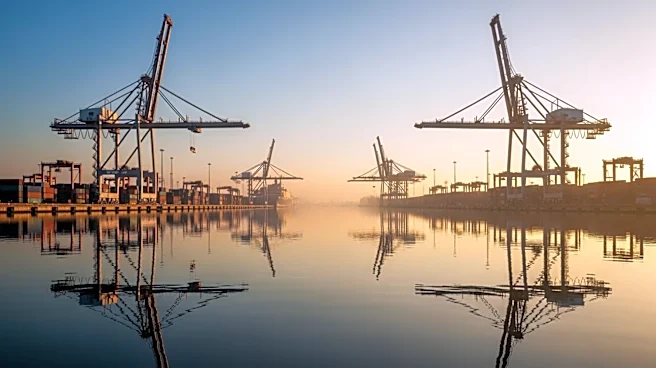
A recent report by industrial real estate firm Colliers indicates that U.S. seaport activity has stabilized at historically elevated levels. The report, titled '2026 U.S. Seaports Outlook,' highlights the transition from pandemic-era volatility to a more
normalized trade environment in 2025. This stabilization is attributed to normalized supply chains, steady consumer demand, and diversified global sourcing. Key factors contributing to this stability include front-loading of imports, improved port efficiency, and a strategic shift towards East and Gulf Coast gateways. These ports benefit from proximity to major U.S. population centers and robust rail and inland distribution networks, making them efficient for reaching end consumers. Additionally, ongoing infrastructure investments, such as expanding berth capacity and enhancing on-dock rail, are expected to further support this stability.
Why It's Important?
The stabilization of U.S. seaport activity is significant for the logistics and supply chain sectors, as it reflects a return to more predictable trade patterns following the disruptions caused by the pandemic. This stability supports industrial demand and investment in port infrastructure, which is crucial for maintaining efficient cargo flow and meeting consumer needs. The shift towards East and Gulf Coast ports also indicates a strategic diversification away from reliance on West Coast entry points, which could mitigate risks associated with geopolitical tensions and trade policy shifts. For investors, the focus on infrastructure improvements promises long-term benefits, including increased cargo throughput, reduced dwell times, and stronger rent growth in port-proximate areas.
What's Next?
Looking ahead, continued investment in port infrastructure is expected to enhance the capacity and efficiency of U.S. seaports. This includes deepening channels, modernizing terminals, and improving rail connectivity. These efforts aim to accommodate larger vessels and facilitate faster inland distribution, reducing reliance on trucking. Additionally, the ongoing geopolitical tensions, such as the Iran conflict, may influence seaport-focused leasing and investment activity by affecting cost volatility and trade flows. However, the long-term outlook for port-adjacent industrial real estate remains positive, driven by the need for diversified supply chains and robust logistics networks.