



What's Happening?
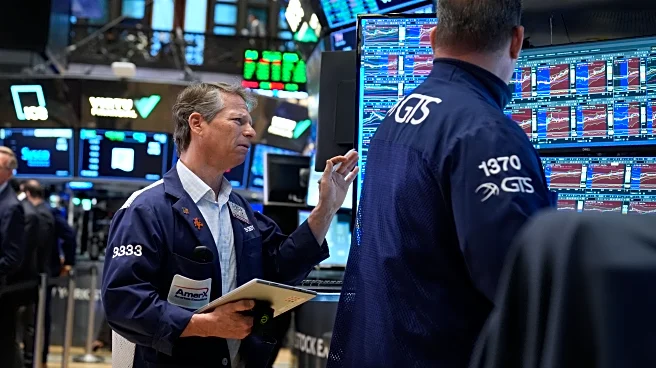
The S&P 500 is on the verge of joining other U.S. benchmarks in a correction as the Iran war enters its fifth week. The ongoing conflict has led to significant market volatility, with major averages experiencing losses. The Nasdaq Composite and Dow Jones
Industrial Average have already entered correction territory, and the S&P 500 is close behind. The closure of the Strait of Hormuz and rising oil prices are contributing to investor unease. Analysts are concerned about the potential for further downside, as geopolitical tensions and economic uncertainties weigh on market sentiment. The upcoming nonfarm payrolls report will provide insight into the U.S. labor market's resilience amid these challenges.
Why It's Important?
The potential correction of the S&P 500 highlights the broader impact of geopolitical conflicts on financial markets. The Iran war has disrupted global oil supply, leading to increased prices and market volatility. Investors are closely monitoring the situation, as prolonged conflict could exacerbate economic uncertainties and affect market recovery prospects. The closure of the Strait of Hormuz is a critical factor, as it impacts global trade and energy markets. The upcoming nonfarm payrolls report will be a key indicator of the U.S. economy's ability to withstand these challenges, influencing investor sentiment and market dynamics.
What's Next?
As the Iran conflict continues, investors will be watching for developments that could impact market stability. The U.S. is reportedly increasing its military presence in the Middle East, which could influence geopolitical dynamics and market sentiment. The nonfarm payrolls report will provide crucial data on the U.S. labor market, potentially affecting economic forecasts and investor confidence. Analysts are also monitoring oil prices and inflation expectations, as these factors play a significant role in shaping market trends. The resolution of the Iran conflict and its impact on global trade will be critical in determining the future trajectory of U.S. benchmarks.
Beyond the Headlines
The Iran conflict underscores the interconnectedness of global markets and the potential ripple effects of geopolitical tensions. The situation highlights the importance of strategic risk management and contingency planning for investors and businesses. The closure of the Strait of Hormuz serves as a reminder of the vulnerabilities in global trade and energy supply chains. As the conflict unfolds, stakeholders must consider the long-term implications for market stability and economic growth, emphasizing the need for diplomatic solutions and international cooperation.