



What's Happening?
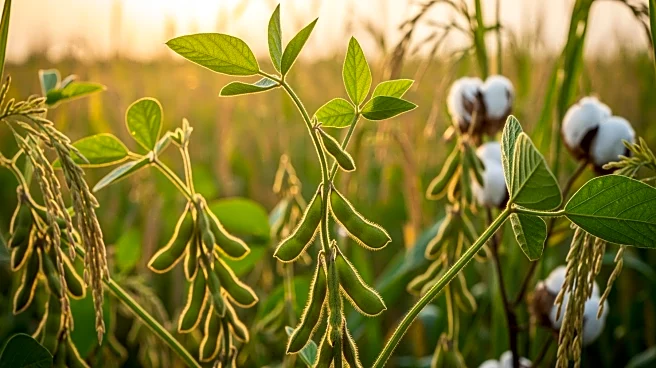
As the 2026 spring planting season approaches, U.S. farmers are adjusting their crop choices due to economic pressures. CoBank's latest outlook suggests a significant shift towards soybeans, with acreage expected to rise by nearly 6% compared to the previous
year. This increase is driven by enhanced domestic soy crush capacity and anticipated demand from China, making soybeans more profitable than other crops like corn, wheat, sorghum, cotton, and rice. The Environmental Protection Agency's potential announcement of higher renewable volume obligations could further boost soybean-based biofuel demand. In contrast, corn acreage is projected to decline by 4.8%, although it may expand in certain western states due to steady domestic demand and improved crop insurance premiums.
Why It's Important?
The shift in crop acreage reflects broader economic trends affecting U.S. agriculture. Soybeans' increased profitability and demand highlight the evolving dynamics in global trade and domestic policy, particularly concerning biofuels. This change could impact farmers' income and the agricultural supply chain, influencing commodity prices and export strategies. The decline in corn, rice, and cotton acreage may affect related industries, such as feedlots and textile manufacturing, and could lead to adjustments in market strategies and resource allocation. The recalibration of cropping patterns underscores the need for farmers to adapt to changing economic conditions and market demands.
What's Next?
Farmers will continue to monitor late-winter price shifts and regional basis movements, which could influence final planting decisions. The U.S. Department of Agriculture's March Prospective Plantings report may provide further insights into acreage adjustments, potentially triggering price rallies for certain crops. Stakeholders, including policymakers and industry leaders, will likely assess the implications of these changes on agricultural policy and trade relations, particularly with China. The ongoing adaptation to economic pressures may lead to further innovations in crop management and sustainability practices.