







What's Happening?
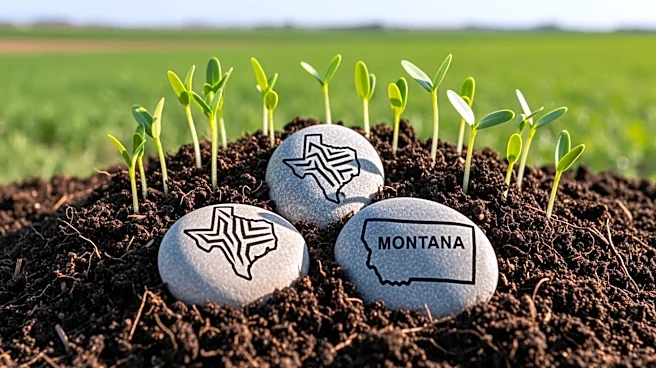
MustGrow Biologics Corp. has received registration approvals from the Texas Department of Agriculture, the Utah Department of Agriculture and Food, and the Montana Department of Agriculture for its TerraSante, an organic biofertility product. TerraSante is a mustard
plant-based biofertilizer designed to enhance soil health by feeding soil microbes with nutritious plant proteins and carbohydrates. This product is already registered and available in several states, including California, Florida, Georgia, Arizona, Idaho, Oregon, and Washington State, under Organic OMRI Listed certification and California’s Organic Input Material Program. The product aims to improve soil and ecological health by increasing beneficial microbial activity, which can enhance nutrient availability and plant yields.
Why It's Important?
The registration of TerraSante in Texas, Utah, and Montana is significant for the agricultural sector in these states, particularly in Texas, where high-value crops such as melons, potatoes, pecans, and grapefruits are major contributors to the agricultural economy. By improving soil health and nutrient uptake, TerraSante could potentially increase crop yields and reduce plant stress, offering economic benefits to farmers. This development aligns with a growing trend towards sustainable agriculture practices that prioritize soil health and ecological balance. The expansion of TerraSante's availability reflects a broader shift in the agricultural industry towards organic and environmentally friendly products.
What's Next?
With the new state registrations, MustGrow is likely to focus on expanding its market presence and increasing sales of TerraSante in these regions. The company may also continue to seek additional state registrations to broaden its reach across the U.S. As more farmers adopt TerraSante, there could be increased interest in similar biofertility products, potentially driving innovation and competition in the organic agriculture sector. Stakeholders, including agricultural policymakers and environmental groups, may monitor the product's impact on crop yields and soil health to assess its long-term benefits.