






What's Happening?
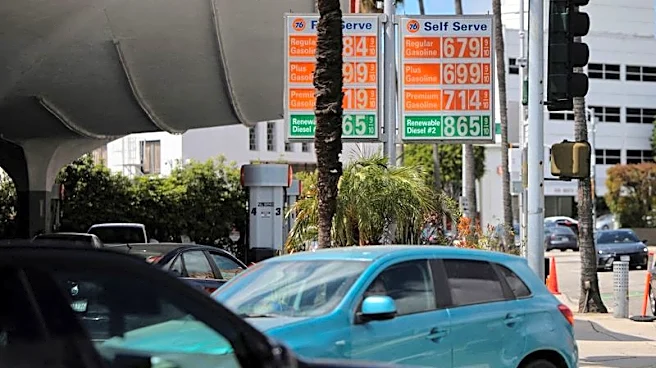
California's rising gas prices, now averaging nearly $6 per gallon, are significantly impacting Uber and Lyft drivers, making it difficult for them to sustain their livelihoods. Drivers like John Mejia are finding it increasingly challenging to earn a decent
income, with some considering leaving the ride-hailing industry. Despite efforts by Uber and Lyft to offer gas savings through various programs, drivers report that these measures are insufficient. The high cost of fuel is prompting drivers to adopt strategies like the 'decline and recline' approach, where they wait for more profitable rides. The situation is exacerbated by the fact that drivers, as independent contractors, must absorb these additional costs themselves.
Why It's Important?
The situation highlights the vulnerability of gig economy workers to fluctuations in essential costs like fuel. As gas prices rise, drivers face reduced earnings, which could lead to a decrease in the availability of ride-hailing services. This could impact consumers who rely on these services for transportation, particularly in urban areas. The issue also raises questions about the sustainability of the gig economy model, where workers bear the brunt of operational costs. The response from ride-hailing companies and potential policy interventions could shape the future of gig work in the U.S.
What's Next?
If gas prices remain high, more drivers may exit the industry, potentially leading to increased fares as companies try to attract and retain drivers. This could prompt further discussions about the classification and support of gig workers, possibly influencing legislative actions. Ride-hailing companies may need to explore additional measures to support drivers, such as more substantial fuel subsidies or incentives for switching to electric vehicles. The ongoing situation will likely continue to be a point of contention between drivers, companies, and policymakers.