






What's Happening?
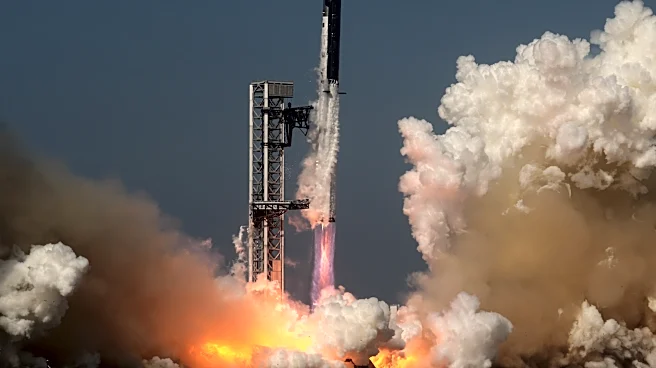
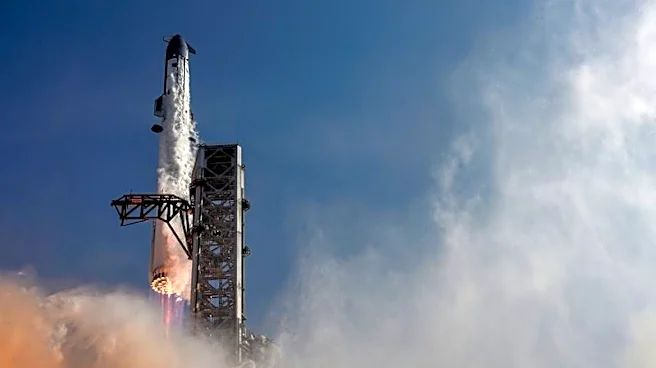
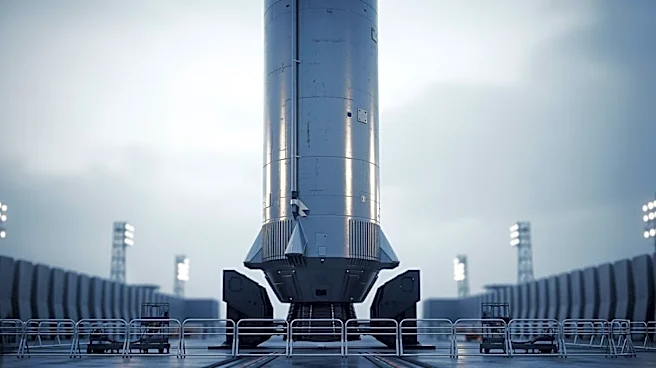
The U.S. Federal Aviation Administration (FAA) has grounded SpaceX's Starship V3 megarocket following a mishap during its debut flight on May 22. The FAA has classified the incident as a mishap and is requiring an investigation to ensure public safety
before the rocket can fly again. The Starship V3, a key component of SpaceX's vision for deep-space exploration, is designed to be fully reusable and is slated to carry astronauts to the lunar surface on NASA's Artemis 4 mission in 2028. The recent test flight, which was the 12th for the Starship program, included successful deployment of dummy and actual Starlink satellites. However, the Super Heavy booster failed to perform necessary engine burns for a controlled splashdown, resulting in a hard landing in the Gulf of Mexico.
Why It's Important?
The grounding of the Starship V3 highlights the challenges and risks associated with developing new space technologies. This incident could delay SpaceX's ambitious plans for deep-space exploration and its role in NASA's Artemis program. The investigation and subsequent findings will be crucial in determining the safety and reliability of the Starship system. The outcome could affect SpaceX's timeline for future missions and its ability to meet contractual obligations with NASA. Additionally, this situation underscores the importance of regulatory oversight in ensuring the safety of space operations.
What's Next?
SpaceX will conduct an investigation into the cause of the mishap, with the FAA overseeing the process. The investigation's findings will determine the necessary corrective actions and the timeline for the Starship V3's return to flight. The outcome will be closely watched by industry stakeholders, as it could influence future regulatory requirements and the pace of innovation in the commercial space sector. SpaceX's ability to address the issues and resume its flight schedule will be critical for maintaining its leadership in space exploration.