
What's Happening?
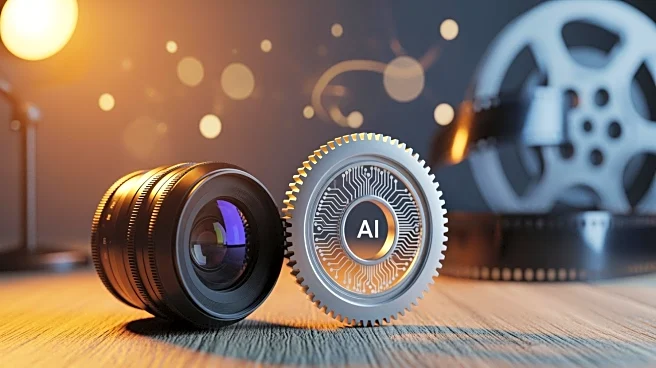
Leonardo DiCaprio, recently named Time's Entertainer of the Year and a Golden Globe nominee, has shared his views on the role of artificial intelligence (AI) in filmmaking. DiCaprio acknowledges that AI could
serve as an enhancement tool for young filmmakers, allowing them to create unprecedented works. However, he emphasizes that true art must originate from human creativity, as AI-generated content often lacks the depth and humanity of human-made art. DiCaprio's comments come amid a broader industry debate, with other filmmakers like Guillermo del Toro and Denis Villeneuve expressing skepticism about AI's place in the creative process. While some, like James Cameron, recognize AI's potential to reduce costs in technical areas like visual effects, they agree that AI cannot replace the unique contributions of human artists.
Why It's Important?
DiCaprio's remarks highlight a critical discussion in the entertainment industry about the future of creativity and technology. As AI continues to advance, its potential to transform filmmaking raises questions about the preservation of artistic integrity and the role of human creativity. The debate touches on broader concerns about AI's impact on various industries, including potential job displacement and the ethical implications of machine-generated content. For the film industry, the challenge lies in balancing technological innovation with the preservation of human artistry, ensuring that AI serves as a tool rather than a replacement for human creativity.
What's Next?
The ongoing discourse around AI in filmmaking suggests that industry stakeholders will continue to explore the technology's capabilities and limitations. As AI tools become more sophisticated, filmmakers may experiment with integrating AI into their creative processes, potentially leading to new forms of storytelling. However, the industry will likely maintain a focus on safeguarding the human elements of art, with discussions around ethical guidelines and best practices for AI use in creative fields. The outcome of these discussions could shape the future of filmmaking and influence how other creative industries approach AI integration.