





What's Happening?
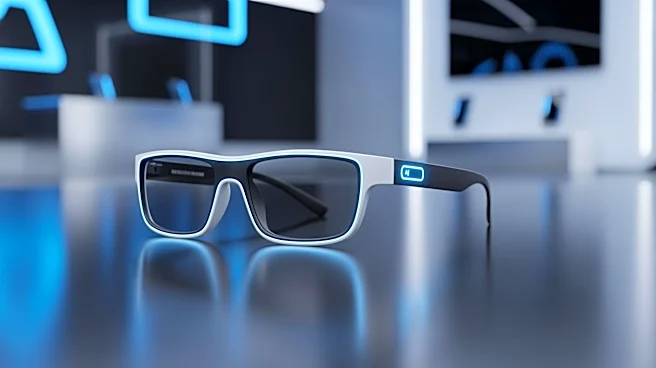
Snap has announced a multi-year partnership with Qualcomm to utilize Snapdragon XR chips in its Specs unit, aiming for a consumer launch of augmented reality glasses by 2026. This collaboration is expected to bring advanced graphics and on-device AI capabilities
to lighter glasses, moving beyond developer kits. The partnership marks a significant step towards making smart glasses a mainstream consumer product, with the promise of notifications and other functionalities that do not require a smartphone. This development is part of a broader trend in augmented reality technology, which is increasingly intersecting with robotics and enterprise applications.
Why It's Important?
The partnership between Snap and Qualcomm is crucial as it accelerates the development of consumer-ready augmented reality glasses, potentially transforming how users interact with digital content. By integrating advanced AI and graphics into lighter, more accessible devices, Snap aims to make smart glasses a viable option for everyday use. This move could significantly impact the tech industry by setting a new standard for wearable technology and expanding the use cases for augmented reality beyond niche applications. The collaboration also highlights the growing importance of AR in various sectors, including robotics and spatial computing, which could lead to increased efficiencies in industries such as manufacturing and logistics.
What's Next?
As Snap and Qualcomm work towards the 2026 launch, the focus will likely be on refining the technology to ensure it meets consumer expectations for usability and functionality. The partnership may also prompt other tech companies to accelerate their own AR initiatives, potentially leading to increased competition and innovation in the smart glasses market. Additionally, the integration of AR with robotics and enterprise applications could drive further advancements in these fields, offering new opportunities for businesses to enhance their operations through augmented reality technology.
Beyond the Headlines
The Snap-Qualcomm partnership could have broader implications for the tech industry, particularly in terms of ethical and privacy concerns related to augmented reality. As AR glasses become more prevalent, issues such as data security and user privacy will need to be addressed to ensure consumer trust. Furthermore, the development of AR technology may influence cultural shifts, as it changes how people interact with digital content and each other. The potential for AR to become a standard tool in various industries also raises questions about the future of work and the skills required to thrive in an increasingly digital environment.