





What's Happening?
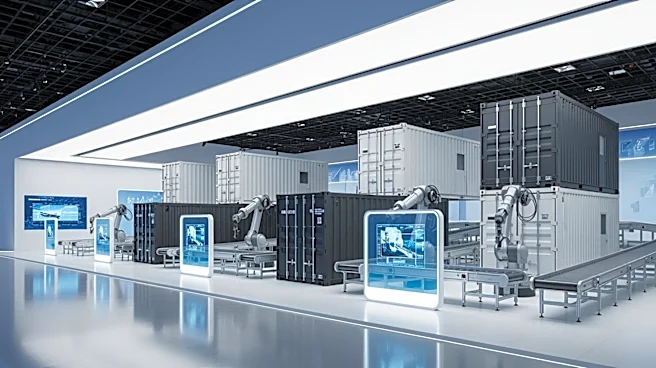
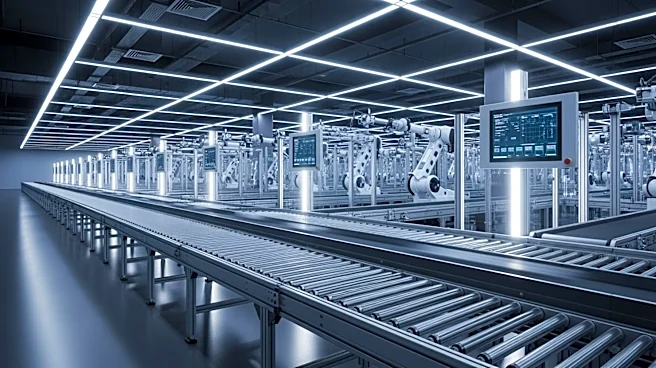
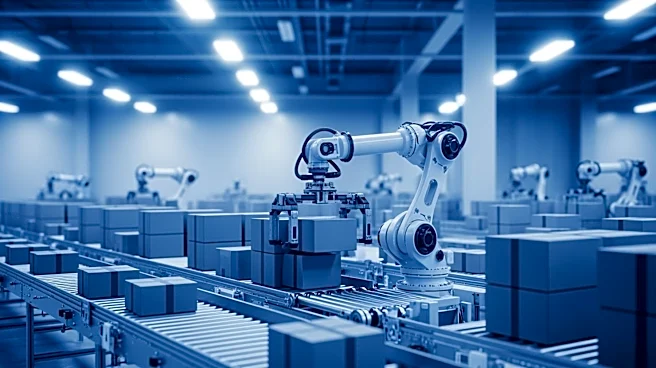
Prologis, a real estate investment trust, has published a report indicating that the adoption of automation in warehouses is driving demand for well-located, technology-enabled spaces. The report notes that automation is becoming increasingly prevalent,
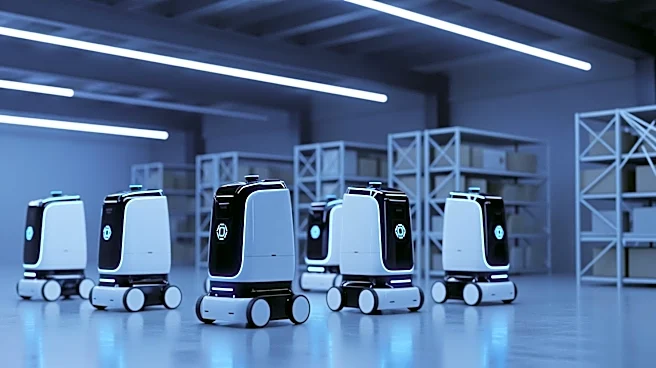
with 30% of modern logistics spaces now utilizing automated systems, up from 20-25% five years ago. This trend is driven by labor shortages and the need for faster throughput, with companies leveraging autonomous mobile robots and automated guided vehicles to optimize warehouse operations.
Why It's Important?
The acceleration of warehouse automation is reshaping the logistics industry, enhancing service levels and operational efficiency. As companies adopt automation, they can improve speed, accuracy, and throughput, which translates into higher service levels and market share. This shift is also impacting real estate values, with automated facilities seeing higher retention rates, longer leases, and rental premiums. The trend underscores the importance of technology in maintaining competitive advantage in logistics, as companies seek to operate more efficiently in labor-constrained markets.
What's Next?
The report suggests that automation will continue to expand, with penetration expected to reach 50% by 2035. As modular systems become more prevalent, companies can deploy automation in existing buildings with minimal retrofitting, offering a faster return on investment. This could lead to further demand for modern logistics real estate, as companies seek spaces that can accommodate advanced technologies. The ongoing adoption of automation is likely to drive supply chain performance and real estate value, reinforcing the structural demand for technology-enabled warehouse spaces.
Beyond the Headlines
The rise of automation in warehouses raises questions about the future of labor in the logistics industry. As companies increasingly rely on technology to optimize operations, there may be implications for employment, with potential shifts in job roles and skill requirements. Additionally, the integration of automation into logistics highlights the need for companies to balance technological advancements with ethical considerations, ensuring that automation enhances rather than replaces human labor.