







What's Happening?
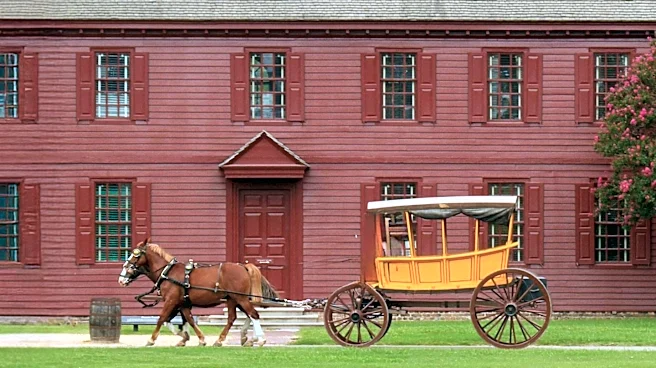
North Augusta's Living History Park, operated by the Olde Towne Preservation Association, provides visitors with an immersive experience of colonial America. Established on a former city water works dump site in 1993, the park features period-appropriate
buildings such as a blacksmith forge, a meeting house, a tavern, and a grist mill. The park, which spans 7.5 acres, is funded by grants and donations and offers free admission. It serves as a historical retreat, showcasing life between 1735 and 1785. The park hosts various events, including an annual July 4th celebration and the major 'Colonial Times' event in October, featuring reenactors demonstrating colonial life.
Why It's Important?
The Living History Park plays a crucial role in preserving and educating the public about America's colonial past. By offering a tangible connection to history, the park enhances cultural understanding and appreciation for the nation's heritage. It also serves as a community hub, attracting visitors and fostering local tourism. The park's events provide educational opportunities for schools and families, promoting historical literacy. Additionally, the park's reliance on grants and donations highlights the importance of community support in maintaining cultural institutions. The park's success could inspire similar projects, contributing to the preservation of historical sites nationwide.
What's Next?
The park plans to expand its offerings with more reenactors and events, enhancing the visitor experience. The upcoming 'Colonial Times' event in October is expected to draw significant attention, potentially increasing visitor numbers and community engagement. The park's ongoing development and programming will likely continue to rely on community support and funding. Future plans may include additional historical reenactments, educational programs, and collaborations with local schools and organizations. The park's growth could also lead to increased tourism, benefiting the local economy and raising awareness of the region's historical significance.