






What's Happening?
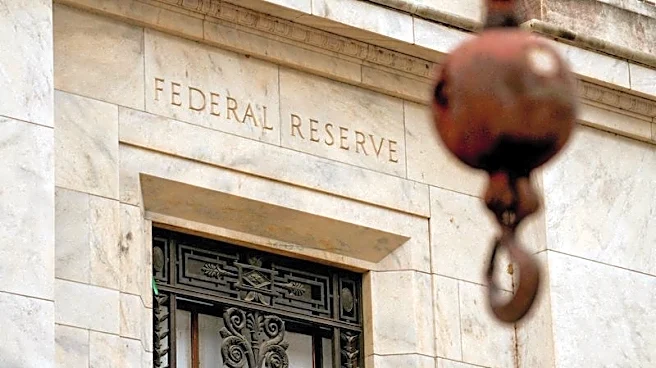
The Federal Reserve is grappling with rising inflation pressures as the Iran conflict drives up energy prices. The Consumer Price Index (CPI) for March is expected to show a 3.3% annual increase, marking the highest rate since May 2024. This surge is attributed
to the Iran war, which has caused a significant jump in fuel costs, the largest since 1957. The conflict has disrupted global energy supplies, leading to increased transportation and production costs for various goods, including food. Despite a recent truce between the U.S. and Iran, energy prices remain high, with the U.S. oil benchmark still 43% above pre-war levels. The Federal Reserve, which had paused interest rate changes, may need to reconsider its stance if inflation continues to rise.
Why It's Important?
The rising inflation poses significant challenges for the U.S. economy, affecting both consumers and businesses. Higher energy prices are expected to increase costs for goods and services, potentially straining household budgets and reducing consumer spending, which accounts for a substantial portion of GDP. Businesses face increased operational costs, particularly those reliant on transportation and energy-intensive processes. The Federal Reserve's ability to manage inflation while supporting economic growth is crucial, as prolonged inflation could lead to higher interest rates, impacting borrowing costs for consumers and businesses. The situation underscores the interconnectedness of global events and domestic economic stability.
What's Next?
The Federal Reserve will closely monitor inflation trends and may need to adjust interest rates if inflationary pressures persist. The outcome of the Iran conflict will significantly influence energy prices and, consequently, inflation. A resolution could stabilize energy markets, potentially easing inflation. However, continued geopolitical tensions may prolong economic uncertainty. Policymakers and businesses will need to adapt to these evolving conditions, balancing short-term challenges with long-term economic strategies.