





What's Happening?
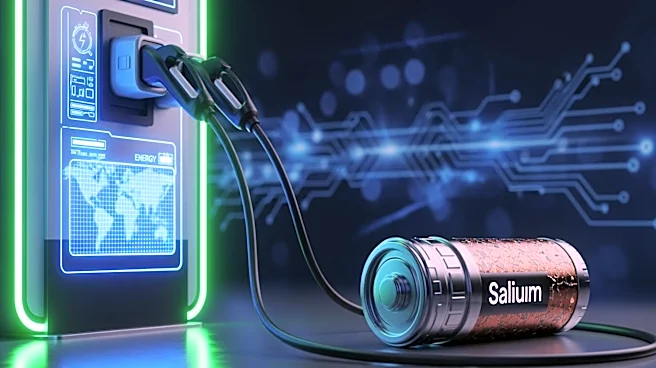
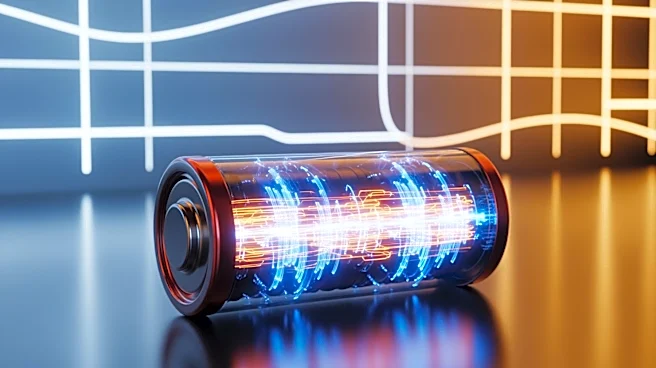
General Motors (GM) has announced a significant advancement in energy storage technology with the development of sodium-ion battery cells designed for grid-scale applications. This initiative, revealed at a GM event in San Francisco, is in partnership
with Peak Energy and supported by GM Ventures. The sodium-ion technology is being developed to address the growing demand for reliable and affordable energy storage solutions, particularly as AI data centers and increased electricity consumption place additional pressure on the power grid. Unlike lithium-ion batteries, sodium-ion cells can operate over a wider temperature range and require less maintenance, potentially reducing the total cost of ownership over their lifespan. GM's research and development efforts are centered in Warren, Michigan, where the company is leveraging its existing battery expertise to prototype these new cells.
Why It's Important?
The introduction of sodium-ion batteries for grid storage represents a strategic shift in how energy storage is approached, moving beyond the traditional focus on electric vehicles. This development is crucial as it offers a potential solution to the challenges of energy storage in real-world conditions, providing a more sustainable and cost-effective alternative. Sodium-ion technology could significantly impact the energy sector by reducing reliance on materials that are subject to supply chain constraints and geopolitical risks. Additionally, the ability to produce these batteries domestically supports U.S. manufacturing and innovation, potentially leading to economic benefits and energy independence. If successful, this technology could transform the way electricity is stored and managed, enhancing grid resilience and supporting the integration of renewable energy sources.
What's Next?
GM plans to begin prototyping sodium-ion cells for stationary use at its Wallace Battery Cell Innovation Center later this year. The company is also continuing to support immediate grid demands through its Ultium Cells joint venture with LG Energy Solution, producing lithium-iron-phosphate batteries for commercial applications. As the sodium-ion technology matures, GM will need to demonstrate its cost and reliability advantages in actual deployments. The success of this initiative could lead to broader adoption of sodium-ion batteries in the energy sector, potentially influencing future energy policies and infrastructure investments.