





What's Happening?
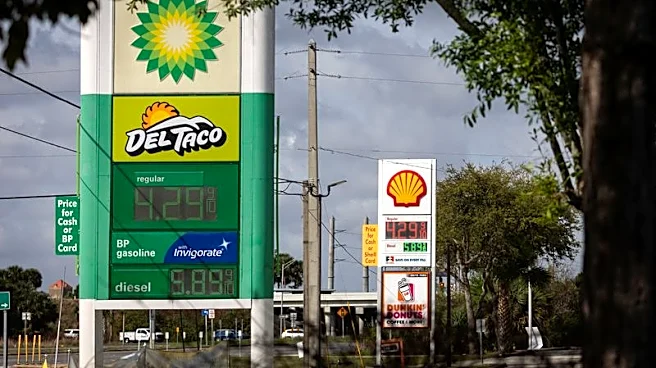
The national average retail price of gasoline in the U.S. has increased by 16 cents, reaching $4.217 per gallon. This rise is attributed to wholesale price hikes and ongoing global tensions, particularly the Iran war. Retailers are facing reduced margins
due to these price increases, with the current average retail gasoline margin at 22.9 cents per gallon. The U.S. has announced a blockade of the Strait of Hormuz, further impacting oil prices and contributing to the volatility in fuel markets.
Why It's Important?
The increase in gasoline prices has significant implications for consumers and retailers. Higher fuel costs contribute to inflation, affecting consumer spending and economic stability. Retailers are pressured to raise prices to maintain margins, which could lead to reduced consumer demand. The geopolitical tensions surrounding the Strait of Hormuz exacerbate the situation, potentially leading to prolonged disruptions in global oil supply and further price volatility.
What's Next?
Retailers may be forced to increase gasoline prices further to sustain operations, potentially leading to consumer backlash and government scrutiny over price gouging. The geopolitical situation in the Strait of Hormuz remains uncertain, with potential for further disruptions in oil supply. Stakeholders will need to monitor developments closely and adapt strategies to mitigate the impact of rising fuel costs on the economy.